




Our EUROLakes team is fortunate to have the support of talented experts in the field of landscape management and restoration, such as Elton Mudyazvivi, who kindly agreed to shed light on some key questions regarding the 4 Returns Framework (4RF) for landscape restoration. The 4RF is a holistic approach developed to guide long-term, systemic change in degraded landscapes that the EUROLakes project is applying for its measures.
In the EUROLakes project, the 4 Returns Framework plays a central role in shaping inclusive, sustainable strategies that address ecological, social, and economic challenges. By integrating local communities, stakeholders, and natural systems, the framework provides a powerful roadmap for reviving the health of our freshwater ecosystems.
We are excited to learn more about how this framework is being applied in the project, and what lessons it holds for lake restoration across Europe’s landscapes and beyond.
What is your role in the project?
I am Elton Mudyazvivi. In my role as Landscape Coordinator at Wetlands International Global Office (WIGO), I am responsible for structuring and leading the roll-out of our holistic landscape approach, the 4 Returns Framework, as well as capacity building of our global network of landscape practitioners. In the EUROLakes project, I advise project partners on the integration of the 4 Returns Framework in the project methodology as well as capacity building and joint learning to facilitate replication of best practices.
What is the 4 Returns Framework?
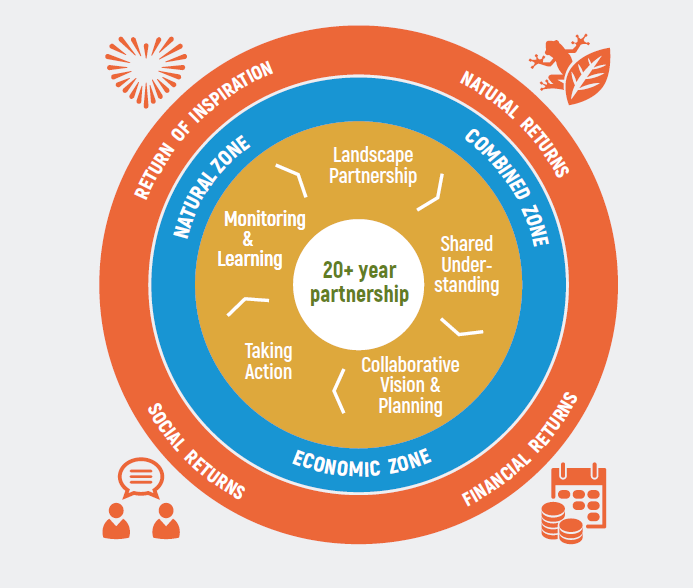
The 4 Returns Framework is a tool designed to simplify the complexity inherent in holistic or ecosystem approaches, or more simply landscape approaches. This means that it is not something for experts only but can be used by all landscape stakeholders to transform their landscape from degraded to restored and conserved. The framework aims to harmonise the different, sometimes competing, stakeholder needs and management approaches, to optimise a full range of inspirational, natural, social and economic returns for multiple stakeholder groups. The 4 Returns Framework was developed in 2012 combining methodologies by leading organisations and people in the field of landscape management for decades, led by Commonland, and further enhanced with a collaboration with Landscape Finance Lab and Wetlands International. The framework is considered innovative because it integrates ecological, social, and economic objectives, especially inspiration, fostering long-term commitment and collaboration among diverse stakeholders. By emphasizing a 20-year vision and the interconnectedness of natural and human systems, the 4 Returns Framework offers a scalable model for sustainable development.
How does the 4RF apply to lake restoration in EUROLakes?
In the context of EUROLakes, this framework guides the restoration of lakes by emphasizing community engagement, biodiversity enhancement, and sustainable economic development. European lakes and the communities around them are threatened with floods, water scarcity, polluted water, dwindling biodiversity, declining local economies and diminishing aesthetic and cultural values. These can be viewed as losses from the landscapes. To turn these losses into returns, we need to transform this trend of degradation towards restored, thriving and resilient landscapes. EUROLakes applies the 4RF principles in its demonstration sites—Lake Vico in Italy, Lake Bistreț in Romania, and Lake Dümmer in Germany—by fostering inclusive stakeholder participation developing shared visions for each lake, and implementing nature-based solutions-all aligned with the 4 Returns Framework’s 5 process elements. The importance of following the 4RF methodology lies in the ability to integrate ecological restoration with community well-being and economic viability. By adopting this framework, EUROLakes ensures that lake restoration efforts are not only environmentally sound but also socially inclusive and economically sustainable, aligning with broader goals such as the European Green Deal.
What are nature-based solutions, and why are they crucial for lake restoration?
By nature-based solutions (NbS) we refer to those management practices or interventions that work with nature, rather than against it, to deliver the 4 returns simultaneously. In the EUROLakes project, several examples of NbS are to be tested across demonstration sites to improve lake biodiversity, health and resilience: these include buffer strips and sediment traps in agricultural catchments to intercept runoff, trap sediments, and absorb excess nutrients before they reach lake waters, in the process controlling the problem of eutrophication; reed beds and aquatic vegetation restoration to stabilize lake shorelines, which provide habitat for wildlife, and improve water quality; and eco trails to minimize disturbance of critical bird breeding sites, in turn boosting tourism.
What tangible benefits can communities and stakeholders gain from this approach?
This is an important topic, because every stakeholder asks the question “what is in it for me?” Applying the 4 Returns Framework (4RF) to lake restoration offers tangible benefits for local communities, businesses, and nature among several others by fostering a holistic, long-term approach to ecosystem recovery.
For Local Communities, the4RF emphasizes inclusive stakeholder engagement, ensuring that community members actively participate in restoration efforts. Having a seat at the table not only empowers residents to articulate their interests, but also fosters a sense of ownership and stewardship over local natural resources. In the EUROLakes project, communities (who include farmers, residents and fishermen around Lake Vico in Italy, Lake Bistreț in Romania, and Lake Dümmer in Germany) are integral to developing and implementing restoration strategies.
By integrating financial returns into restoration projects, local enterprises can thrive through eco-tourism, sustainable fisheries, regenerative agriculture and other nature-based businesses. Sustainable businesses not only boost the local economy but also contribute positively to ecosystem’s health, while being also profitable.
Nature is a key beneficiary in the4RF as the returns of biodiversity, improved water quality and quantity, mitigation of disaster risks and enhanced ecosystem services are all natural capital. In the final analysis, healthier lake ecosystems can better withstand environmental stresses and support diverse species – that is resilience.
Are there successful examples of this framework in your work?
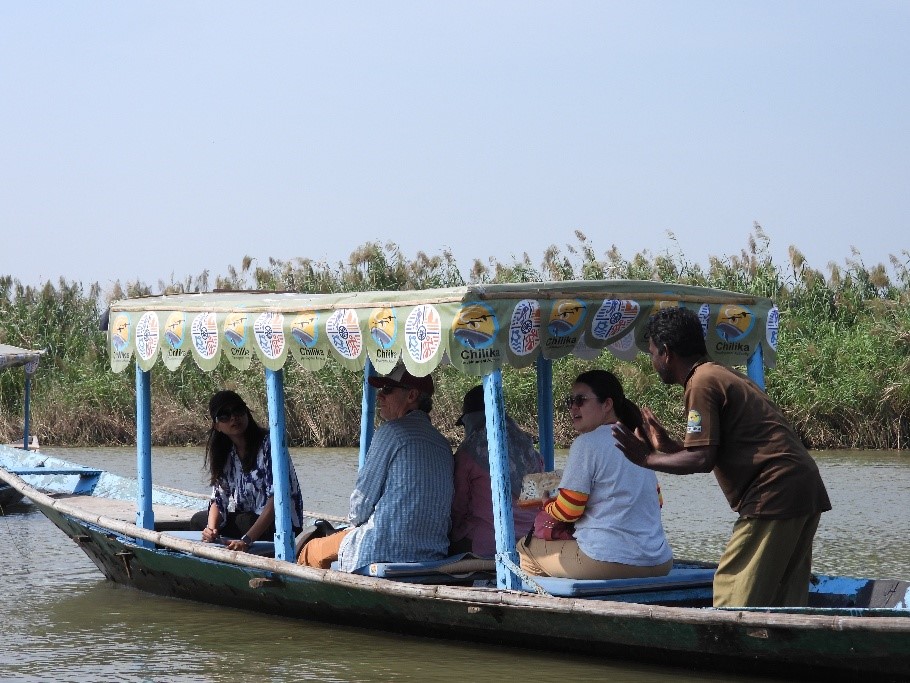
A powerful example of the 4 Returns Framework in action is the restoration of the Chilika Lake landscape in India. Chilika forms a landscape of some 356,000 hectares with the lagoon at its heart covering 116,500 hectares, on the east coast of India, in the Mahanadi River Delta. Applying a landscape-scale approach with the community at its heart, the Chilika Development Authority, supported by Wetlands International, reversed severe degradation of the lake and its catchment. Through inclusive governance, diverse stakeholders—from fishers to government agencies—were convened, rebuilding trust and enabling shared decision-making. Chilika Lake’s restoration combined nature-based solutions such as reconnecting the Chilika lagoon to the Bay of Bengal, protecting of Irrawaddy dolphin population, community-managed wetland ecotourism, catchment vegetation, and sustainable fishing. A multi-stakeholder governance model led by the Chilika Development Authority, involving local communities, government, NGOs, research institutes, and private actors facilitated bottom-up consultations with communities to ensure local needs and values were embedded in the landscape-scale management plan.
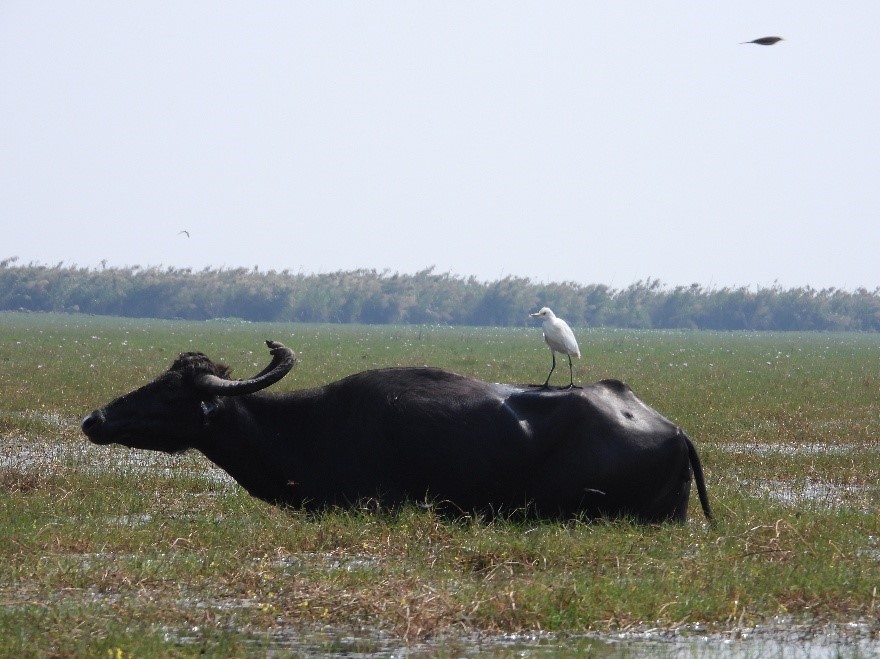
As a result, fish catches surged nearly tenfold, Irrawaddy dolphin populations rebounded, and seagrass beds expanded dramatically, restoring vital natural capital. For local communities, restructured fisheries markets and new ecotourism ventures, such as the Manglajodi birdwatching initiative, boosted incomes, reduced debt, and restored dignity. Businesses flourished, with booming tourism generating an annual economy of US$52 million. The 4R holistic focus—delivering inspiration, social capital, natural capital, and financial capital—reflected in the transformation of Chilika from an ecological crisis point to a thriving landscape supporting people, nature, and the economy.
How can people get involved or support these initiatives?
People can get involved in supporting holistic landscape initiatives in diverse and meaningful ways: policymakers can create enabling environments by establishing inclusive governance frameworks, as seen at Chilika, where the government set up the Chilika Development Authority to coordinate stakeholders and drive restoration. Too often, there is little support for stakeholder processes; businesses can adopt sustainable practices and invest in nature-based solutions (NbS) that align commercial goals with ecological health; philanthropic organizations can provide critical funding to build stakeholder platforms, pilot NbS, and catalyse community engagement; investors can explore opportunities in ecotourism, sustainable fisheries, and green infrastructure that deliver both financial and environmental returns; and experts and researchers such those in EUROLakes can contribute by sharing knowledge, co-developing solutions with local actors, and strengthening adaptive management practices that ensure long-term resilience and impact.