




By Raffaele PELOROSSO
The kernel of the EU-funded EUROLakes project is three natural lakes, which we call demo lakes, selected as living laboratories where integrated protection and restoration actions will be tested on a real scale. Through these pilot areas, the project trials innovative approaches that add economic, social and ecological perspectives to technological solutions.
A demo lake is not just a site for interventions – it is a dynamic ecosystem where restoration measures are co-designed with the local community, continuously monitored and adapted over time. This approach is built upon a robust method – the 4 Returns Framework (4RF) – aimed at generating long-lasting benefits across four dimensions: inspiration, social, natural and financial returns.
Through five key elements – landscape partnerships, shared understanding, collaborative vision, coordinated action and ongoing learning – EUROLakes partners design tailored strategies for each demo lake, adjusting practices to ecological conditions, local pressures and financing opportunities.
Why Vico, Dümmer and Bistreț? Three Lakes, Three European Challenges
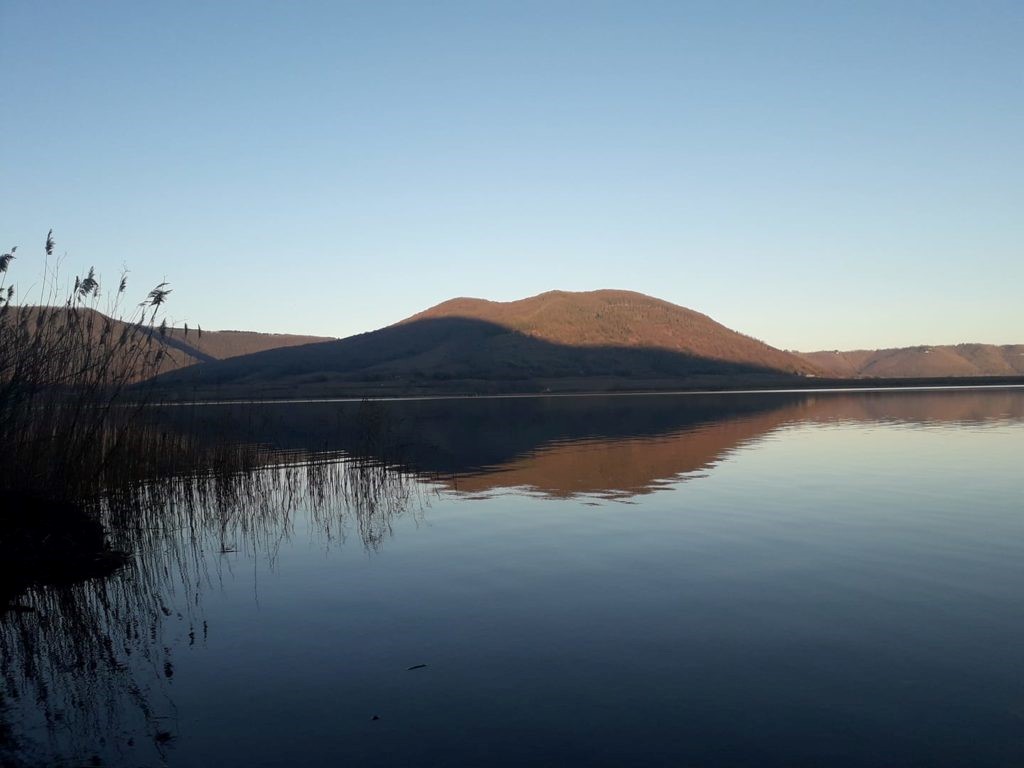
Lake Vico (Italy)
Located in the Lazio region, Lake Vico is a medium-sized volcanic lake reaching depths of about 50 meters. One of its biggest challenges is eutrophication, which means the water becomes overloaded with nutrients due to intensive agriculture – especially hazelnut plantations – which add fertilizers that wash into the lake. Normally, lakes can “refresh” themselves as water flows in and out, but Lake Vico holds onto its water for a very long time – on average up to 17 years. This long residence time limits natural water renewal, and pollutants and nutrients build up and harm water quality.
The project aims to demonstrate how management strategies, participatory planning and nature-based solutions (NBS) can improve water quality. Actions include advanced monitoring, reduction of agricultural runoff, community engagement and installation of meteorological stations to better understand climatic processes.
Lake Dümmer (Germany)
Lake Dümmer, in Lower Saxony, is shallow (average depth around 1.1 meters) and ecologically unique. As part of a Natura 2000 protected area, it hosts sensitive habitats but faces strong pressures: nutrient loads from agriculture, degradation of reed belts, water-level alterations linked to recreational activities and harmful algal blooms in summer.
On this site, EUROLakes strengthens existing but fragmented actions into a coherent strategy like protecting and expanding reed belts, enhancing floating vegetation zones, monitoring grazing impacts on shorelines and raising awareness among stakeholders to reinforce local governance.
Lake Bistreț (Romania)
Lake Bistreț is located in Dolj County in southern Romania. It lies along the left bank of the Danube. This lake presents significant opportunities for wetland restoration and conservation. Classified within the Natura 2000 network, it has a long history of land-use management, including fish farming ponds and natural flood-related processes.
Within EUROLakes, Bistreț serves as a testbed for demonstrating the replicability of NBS actions: expanding wetland areas, restoring connectivity with the Danube, enhancing aquatic biodiversity and supporting sustainable economic development like ecotourism and fisheries, all with the inclusive participation of local communities.
The Central Role of Local Stakeholders
One of the defining strengths of EUROLakes project is its participatory approach. This is not a project where experts design solutions “from above”. Instead, local communities of practice are placed at the centre of the process.
From the very beginning, EUROLakes promotes co-creation of protection and restoration (P&R) plans that reflect and respect the real needs of communities – farmers, local authorities, reserve managers, environmental organisations and residents. This involvement is not merely consultative but structured through workshops, governance groups and training pathways inspired by the 4RF method.
At each demo lake, stakeholders contribute to defining the measures to be implemented, support monitoring and take part in the decision-making. This fosters a sense of shared ownership and increases the long-term sustainability of the solutions, beyond the project’s lifetime.
In conclusion, the three demo lakes of EUROLakes – Vico, Dümmer and Bistreț – are far more than merely natural sites for showcasing solutions. They are genuine natural laboratories, where communities and scientists collaborate, test, learn and build a greener and more resilient future. And although each lake reflects different challenges, they all share one goal: demonstrating that integrated, participatory and sustainable restoration is not only achievable but deeply beneficial for both nature and people.
We invite you to join us, share our vision and explore how Europe is reimagining lake management – not just for today but for generations to come.
Follow the EUROLakes Journey
The EUROLakes journey is fully underway, from the first consortium meetings to the launch of activities at the demo lakes. If you are passionate about environmental protection, lake ecology, landscape restoration, or simply curious about how science and communities can work together, we invite you to follow our campaigns.
Here’s how to stay connected:
- Subscribe to the newsletter to receive updates, stories from the demo sites and exciting opportunities to get involved.
- Follow us on LinkedIn, Facebook and Instagram for beautiful photos from the lakes, stories, reels and live moments from our interactions.
- Subscribe to our YouTube channel for engaging videos and shorts from the sites
- Participate: local authorities, community groups and organisations across Europe may be interested in the EUROLakes replication call, open until 15 January 2026, to apply the 4RF approach in their lake regions.