




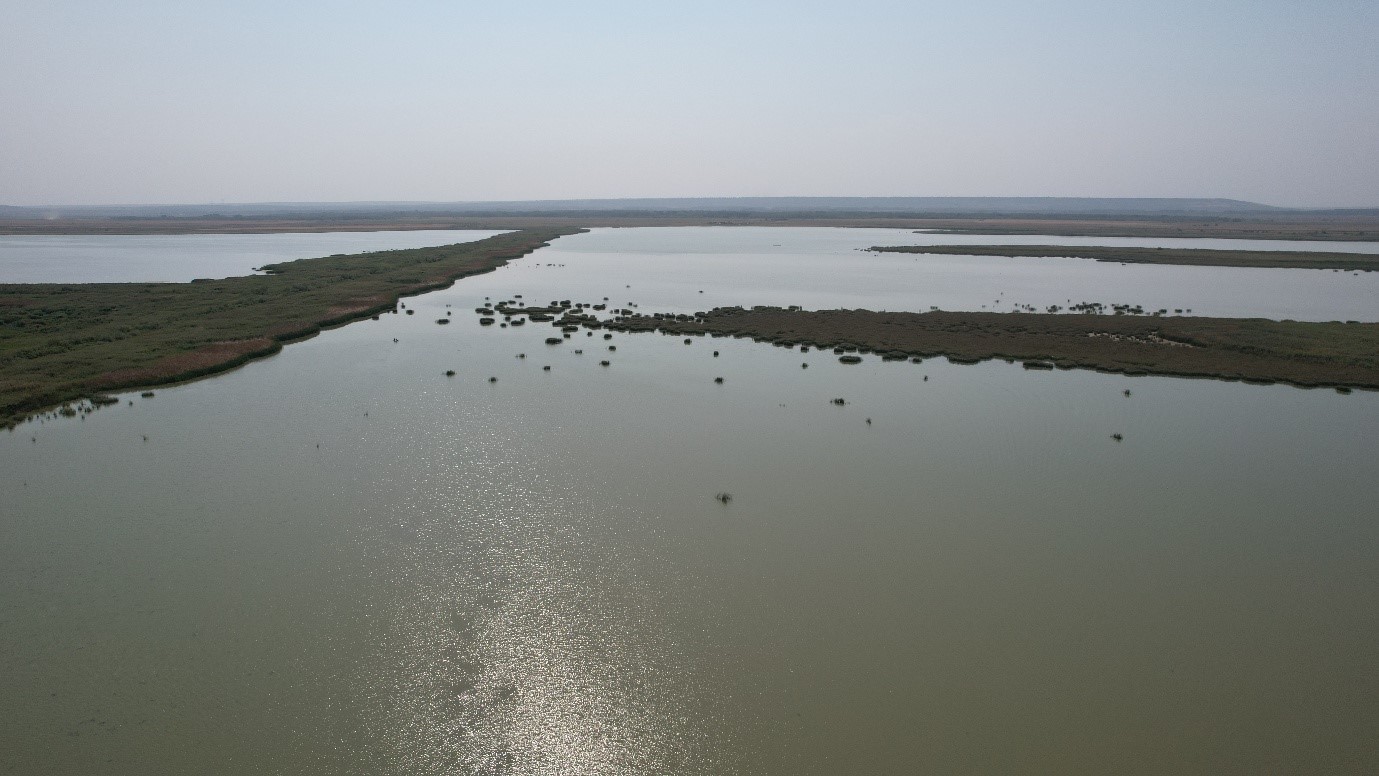
WWF-Romania, together with the Jiu Corridor (Dolj County Center for Nature Protection, Tourism and Sustainable Rural Development), recently hosted a workshop within the framework of the EUROLakes project, in the city of Craiova, bringing public institutions, local organizations, and experts together to plan a thematic visitor route in the Bistreț–Cârna lakes region. The area, located in southern Romania along the Danube, is known for its rich biodiversity – especially migratory bird habitats and cultural landscapes that make it a priority for both conservation and sustainable tourism.
With support from partners at Fondazione Eni Enrico Mattei (FEEM), Italy, participants worked to identify and prioritize criteria that will guide the route’s placement. Using a participatory mapping approach, attendees jointly defined and prioritized two main categories of criteria for the future visitor route:
– environmental criteria, based on land use and land-cover types, used to identify areas where visitor access would be more compatible with landscape functions and lower levels of disturbance;
– connectivity and accessibility criteria, focusing on existing roads and paths, access points and the potential to link key locations and local communities in a coherent and practical way.
All criteria were discussed and weighted collectively, with the purpose of ensuring a balanced approach between environmental considerations and visitor accessibility.
While this is the first step in a broader (open) process designed to connect people with nature while safeguarding ecosystems, the end-result will be a detailed map highlighting the most suitable zones for the route. The initiative aims to promote responsible tourism, raise awareness about wetland conservation and create new opportunities for local communities.
“This collaborative approach ensures that the visitor route will not only offer an enriching experience for people but also respect the ecological balance of the Bistreț–Cârna lakes, while seriously taking into consideration the voices of the locals. It’s a step toward making nature accessible and keeping conservation at the heart of development,” said Mara Nilca from WWF-Romania’s project team.
Why Bistreț Matters
The Bistreț–Cârna lakes are part of an important wetland system along the lower Danube, providing critical habitats for species such as pelicans, herons and fish. Beyond its ecological value, the area holds cultural significance and offers potential for nature-based tourism that could support local livelihoods without compromising environmental integrity.
Next Steps
Following the mapping exercise, the project will move towards feasibility studies and route design, ensuring alignment with conservation goals and community needs. Ultimately, the thematic route will serve as a model for sustainable tourism development in sensitive areas across Europe.
Contributor: WWF Romania, FEEM, Coridorul Jiului