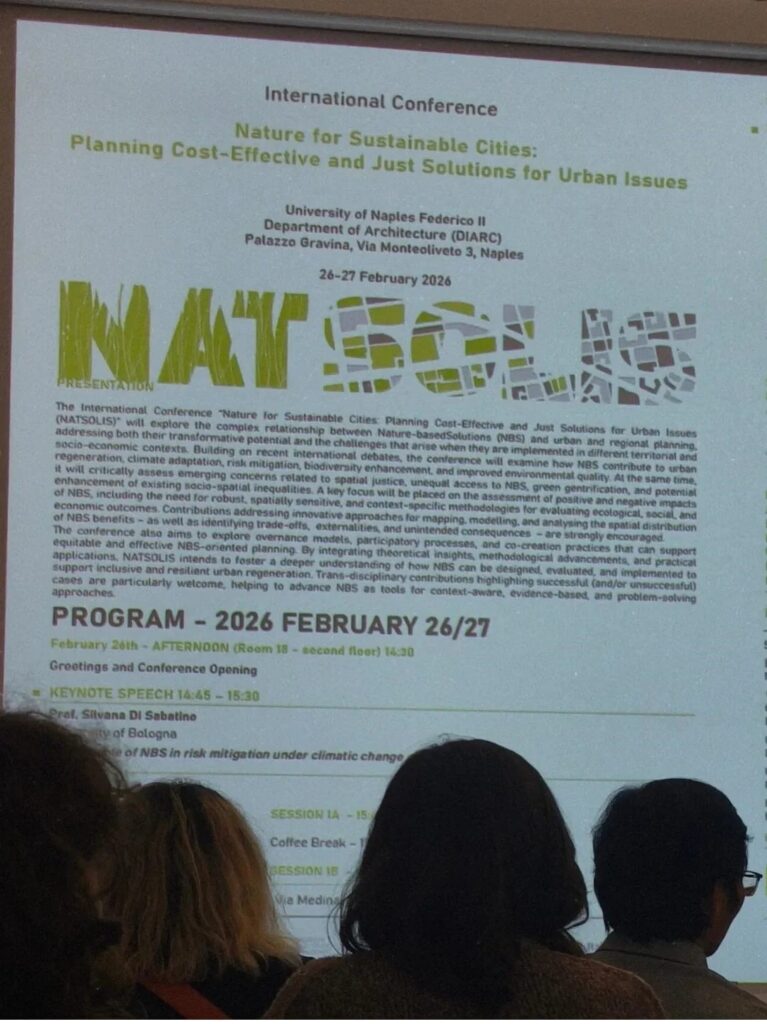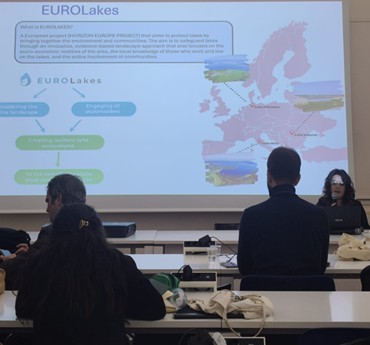



The delicate balance that binds water to land and communities to the landscapes they inhabit, took center stage last month in Naples. On February 26–27, 2026, members of the EUROLakes research team traveled to the University of Naples Federico II to participate in the International Conference: “Nature for Sustainable Cities: Planning Cost-Effective and Just Solutions for Urban Issues” (NatSoliS).
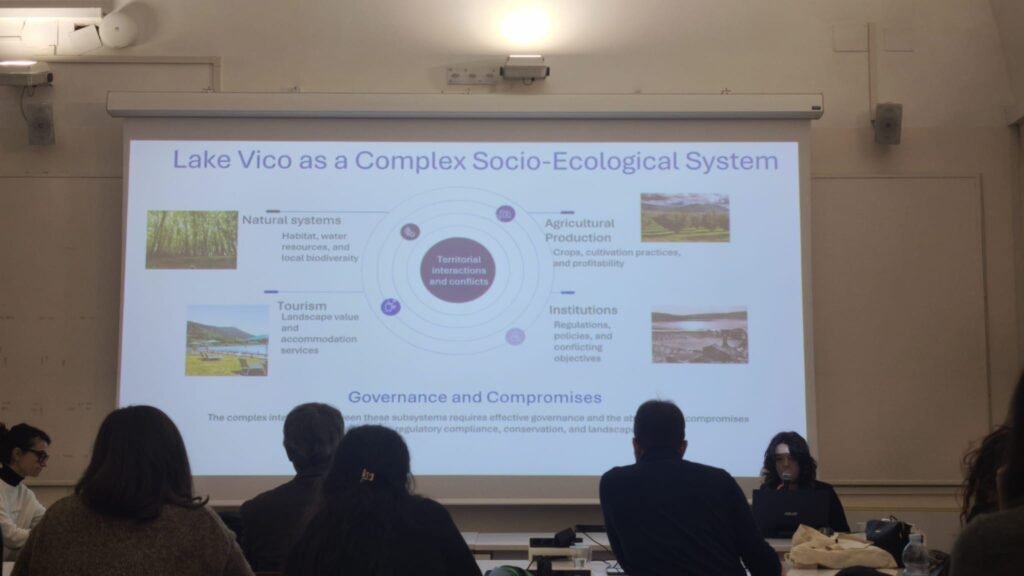
Our mission was to share a vital story of transformation: how participatory planning can bridge the gap between technical expertise and community action in complex socio-ecological systems.
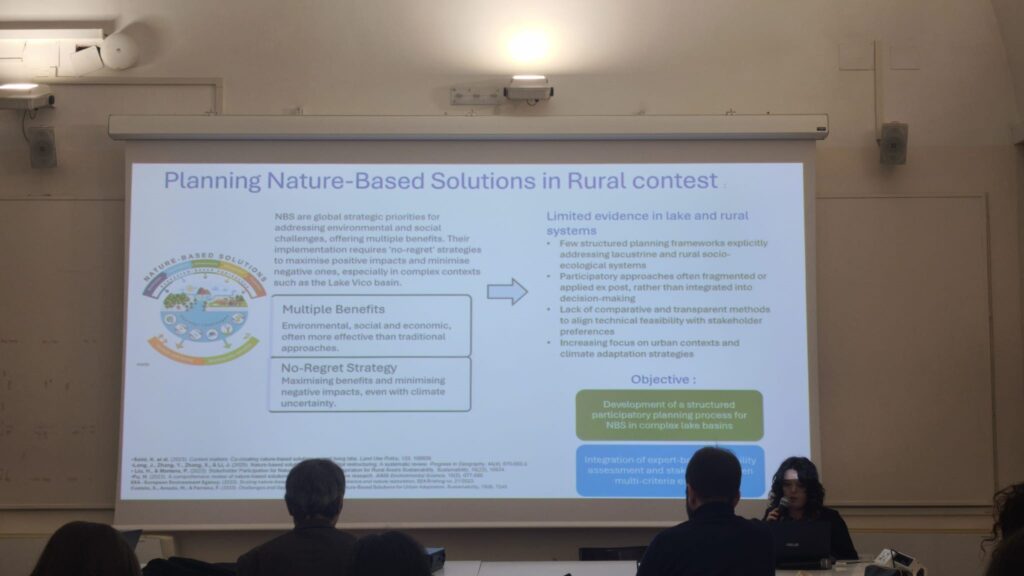
While global climate discussions often gravitate toward urban adaptation, the EUROLakes approach sparked significant interest among international attendees. Currently, there are few structured planning frameworks that explicitly address rural and lacustrine (lake-based) socio-ecological systems. By bringing the specific challenges of inland waters to the forefront, our work stood out as a rare and necessary example in a field often dominated by metropolitan strategies.
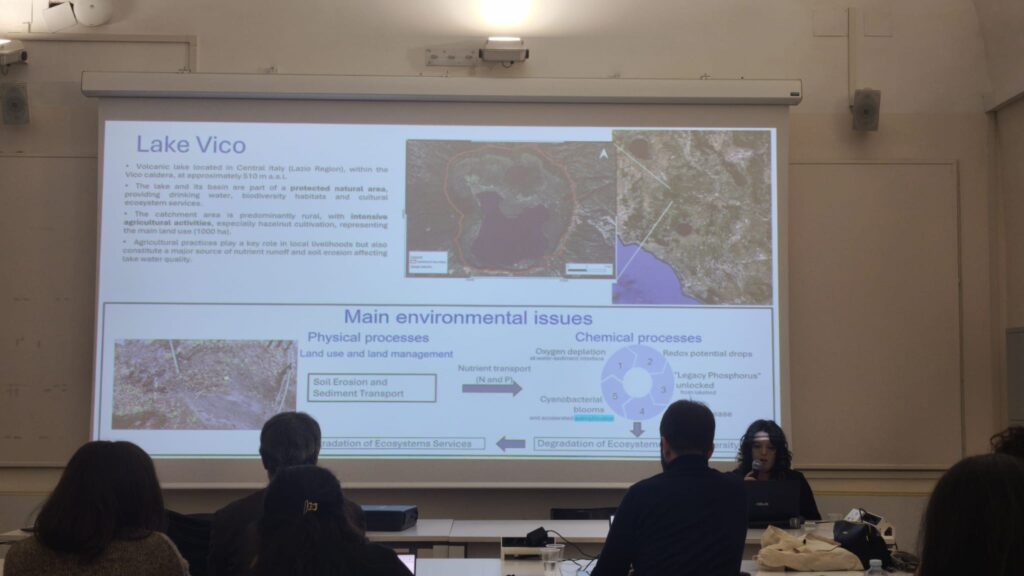
Lake Vico: An Emblematic Case Study
The heart of our team’s showcase focused on Lake Vico, a protected natural area that serves as an emblem of the struggle for environmental balance. While the basin provides vital drinking water and hosts rich biodiversity habitats, it faces severe pressure from soil erosion and nutrient runoff, which accelerate the process of eutrophication.
The project’s core objective was clear: to identify Nature-Based Solutions (NBS) that align technical feasibility with the actual preferences of those who live and work within the basin.
EUROLakes presentation, titled “Participatory Planning for Nature-Based Solutions in Complex Socio-Ecological Systems: Insights from Lake Vico,” was authored by a multidisciplinary team: Chiara Iavarone, Raffaele Pelorosso, Giulia Mancini, Perla Rivadeneyra, Federico Cornacchia, Sebastian Raimondo, Fabio Recanatesi, Carlo Giupponi, and Maria Nicolina Ripa. Representing the group in person were Chiara Iavarone (presenter), Giulia Mancini and Raffaele Pelorosso.
The work is the result of a deep collaboration between the University of Tuscia (Unitus) and Fondazione Eni Enrico Mattei (FEEM). While FEEM designed the participatory planning process, Unitus led the local adaptation, stakeholder mapping and on-site facilitation.
To move beyond fragmented participation, the project established a genuine Community of Practice involving research institutes, local government bodies, farmers, agronomists, local businesses and NGOs. Using Participatory Multi-Criteria Analysis (PMCA), these stakeholders were asked to evaluate four management alternatives:
- Current Management (Business As Usual): Measures in the Agricultural Use Plan (PUA), including spontaneous grassing and erosion control.
- Grassing Optimization: Enhanced vegetative cover in hazelnut groves to intercept runoff during critical periods.
- Environmental Conservation: Implementation of dry-stone walls, vegetated buffer strips, retention basins, and riparian restoration.
- Nature Trail: The creation of an ecotourism path and a coastal buffer through the partial removal of hazelnut groves along the bank.
These options were analyzed against the “4 Returns” Framework—Inspiration, Natural, Social, and Financial – to ensure a holistic view of sustainability.
Crucially, the methodology utilized a digital Participatory Decision Support System (pDSS). This interactive platform provided a transparent, structured framework to aggregate individual stakeholder evaluations, identifying which actions are perceived as most beneficial for the lake, the community and the local economy.
Preliminary Insights and Future Directions
While the analysis is still being refined, preliminary results already indicate a collective desire for change. Stakeholders showed a clear preference for moving away from the “Business as Usual” status quo, expressing strong interest in environmental conservation and the enhancement of sustainable tourism via nature trails.
Participating in NatSolis allowed the EUROLakes team to reinforce a vital message: context matters.
Lake Vico is becoming a living laboratory where dialogue and knowledge exchange are paving the way for long-term sustainability.
Contributor: Chiara Iavarone, UNITUS