




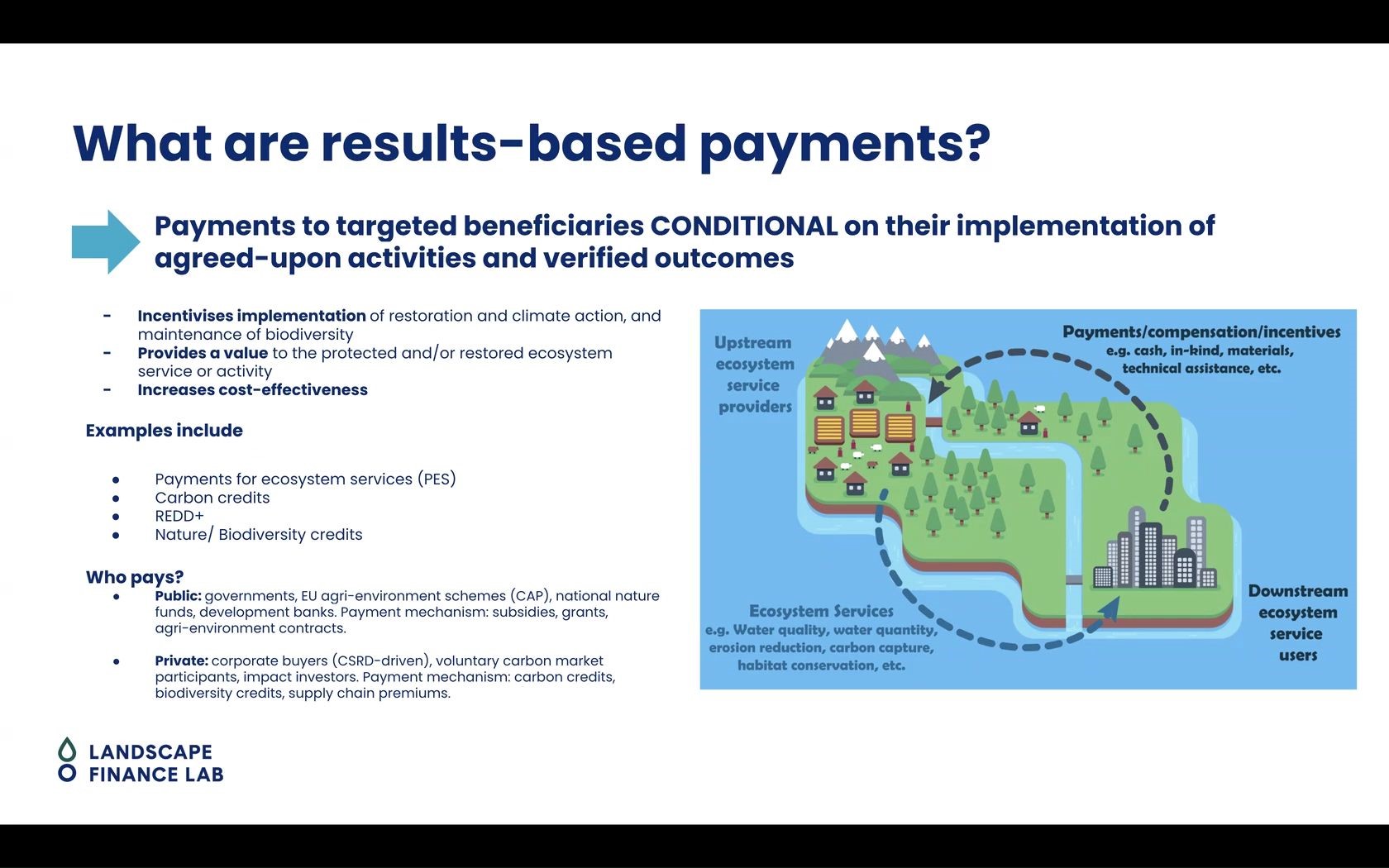
On April 1, the EUROLakes consortium took a significant step in understanding nature financing as a mechanism for a resilient future of Europe’s freshwater ecosystems. In collaboration with our partner Landscape Finance Lab (LFL), we hosted an intensive training session on Results-Based Payments (RBP) – a shift in conservation funding that moves away from paying for “activity” and going towards paying for verified environmental outcomes.
As lake landscapes face the dual pressures of climate change and biodiversity loss, traditional funding models often fall short. This session explored how mechanisms like Payments for Ecosystem Services (PES) and carbon credits can create tangible financial incentives for the restoration and protection of vital inland water bodies.
The Business Case for Healthy Lakes
Landscape Finance Lab opened the session by outlining the immense economic and ecological value of lake landscapes. While lakes host roughly 10% of known species, they remain among the most threatened habitats globally. They highlighted their significance for carbon sequestration and water regulation. On the one hand, by planting natural green belts of trees and shrubs along our shorelines, we create a “living filter” that soaks up carbon dioxide. For every area the size of a football field we restore, we remove the equivalent of 1 to 5 small cars’ worth of greenhouse gases from the air every year. Across Europe, this natural air-cleaning service is worth an estimated €500 million annually in climate protection. On the other hand, healthy floodplains can retain 60–90% of peak flood volumes, while functional watersheds reduce water treatment costs for municipalities by 20–40%.
For these benefits to be realized, however, we must transition to RBP models where public and private buyers pay for proven results.
The training grounded these high-level concepts in the real-world complexities of EUROLakes demo lake sites in Italy, Germany and Romania.
UNITUS shared a critical insight into the changing nature of lake pollution. While nitrogen and phosphorus inputs from agriculture are decreasing, Lake Vico still struggles with oxygen depletion and phosphorus release from sediment – a process now driven largely by climate-induced thermal stratification rather than just runoff. The opportunity here is that while sediment remediation is costly, there is significant potential in the hazelnut supply chain and sustainable tourism. Engaging the “middle-level actors” to bridge the gap between science and corporate interest is now a priority for Vico landscape.
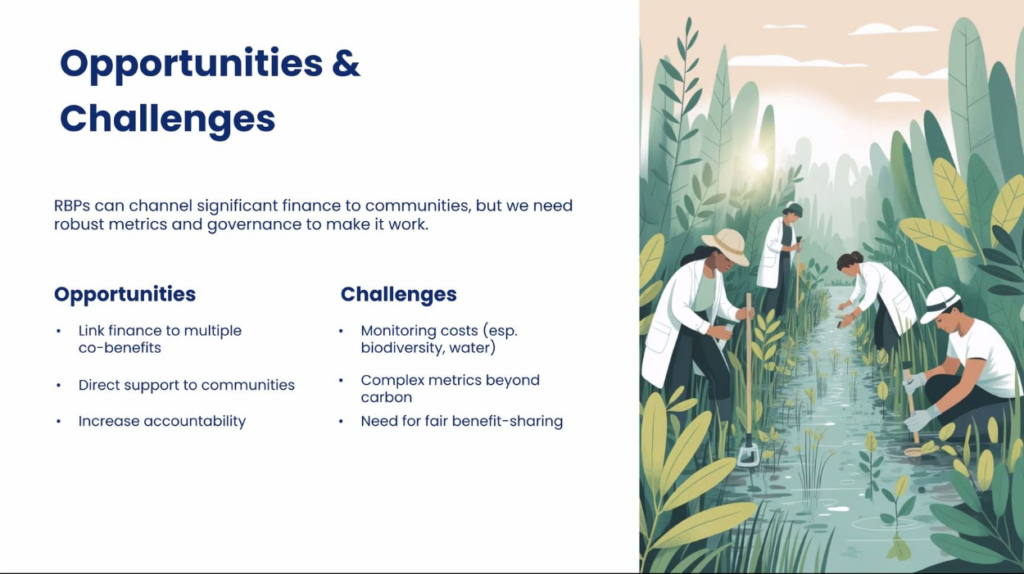
FEEM and NATURSCHUTZRING DUMMERteams are conducting a cost-benefit analysis for wetland restoration, including reed beds and floating vegetation. The challengewould be to determine the exact “break-even” point where carbon credit revenue exceeds intervention costs. With the analysis due in January 2027, the team is currently mapping carbon-rich soils and evaluating different certification standards to ensure market acceptance.
Bridging the Gap: Governance and Communication
A recurring theme throughout the discussion was the “missing link” in conservation finance. WWF Romania highlighted that scientific data alone is not sufficient to attract investment, emphasizing the need for intermediary actors who can work directly with corporate stakeholders, understand financing opportunities, and translate ecological data into concrete, investment-relevant approaches.
The key takeaways for the training participants are summarized below:
- Communication First: Farmers and local actors must understand the direct link between their land management and measurable ecological outcomes before any payment scheme can be launched.
- Landscape-Wide Scope: To reach the scale required for carbon markets, we must look beyond the immediate shoreline and adopt broader landscape framing.
- CSRD as an Entry Point: While biodiversity credits are still an emerging and complex market, non-certified corporate reporting under the Corporate Sustainability Reporting Directive (CSRD) may provide a more accessible starting point for local businesses.
Looking ahead, EUROLakes consortium sees next steps as grounded in capacity building.The session concluded with a clear roadmap for the coming months:
- Partners will deliver small-group training sessions within their own local communities per RBP training scripts developed by our LFL experts.
- University of Tuscia will share innovative sediment remediation alternatives from New Zealand and Australia with the consortium.
- EUROLakes next training theme will focus on integrating eco-tourism with conservation revenue models.
- Lake partners may further explore the potential benefits of a ‘Green Finance Coordinator’ role as a translator of research data to nature investors.
At EUROLakes, we believe that appreciating what nature gives us, means readiness to invest in its health. By refining the results-based models, we are ensuring that our lakes remain resilient, diverse in species and central to Europe’s green economy.