




A Biodiversity Hub
With around 1,300 hectares of water, Lake Dümmer is the second largest lake in Lower Saxony. Together with the directly surrounding wet grasslands, the Dümmer area covers an area of almost 5,000 hectares. The lake was formed during the last ice age, around 11,000 years ago, as a shallow basin in a wide-ranging lowland area.
Lake Dümmer and its landscape are part of a nature park covering approximately 1,150 km² and is one of Lower Saxony’s five wetlands of international importance under the RAMSAR Convention (since 1976). The lake and large areas of its surroundings are part of the European NATURA 2000 network of protected areas.
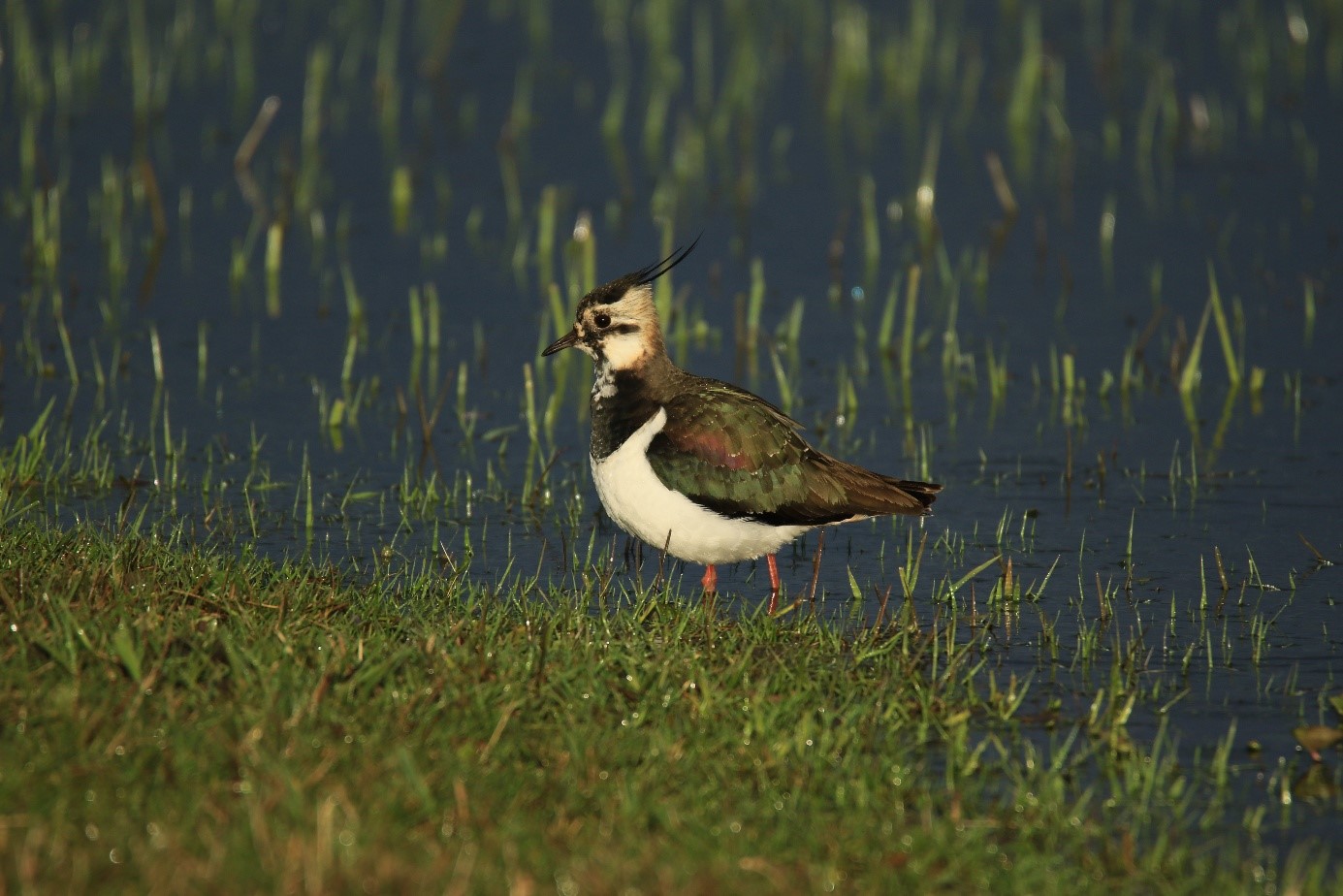
Especially in the winter months, the lake ecosystem become home to a wide variety of migratory bird species, some of which rest there in flocks of many thousands, such as white-fronted geese and lapwings. During the summer months, numerous breeding bird species, some of which are highly endangered, can be found at the lake, such as the black tern and the common snipe.
Extensive population surveys are carried out regularly in cooperation with the nature conservation authorities and nature conservation associations. Measures are taken to protect meadow birds and particularly endangered bird species like the black tern and the osprey, to preserve the reed beds, to maintain small bodies of water for waterfowl and wading birds, amphibians, fish and rare plants, and to renature raised bogs in the vicinity of the lake.
Tourist Attraction
With its high concentration of birds, Lake Dümmer area guarantees visitors a memorable experience of nature. The landscape and bird life around the lake can be explored on a circular trail along the dyke. Viewing points offer fascinating insights into the natural world. The trail takes you through the wet grasslands in the south of the lake and offers the opportunity to observe resting geese in the winter months, while in the summer months meadow birds can be seen at close range. The sensitive routing through the meadow area with designated rest areas for birds strikes a balance between nature tourism and the protection of endangered species. An exhibition in the Dümmer Museum and in the nature conservation station offers visitors further insights. On the lake itself, outside the nature reserves, tourist activities such as swimming, sailing, surfing, rowing, paddling and pedal boating are permitted from the beginning of April to the end of October.
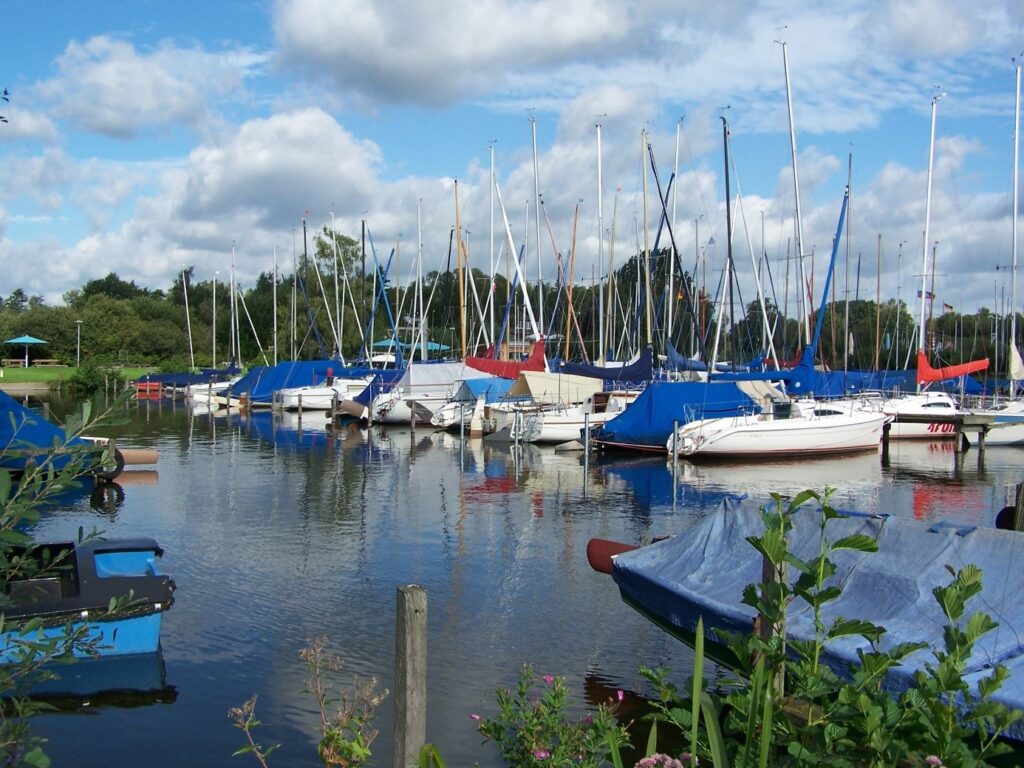
In recent years, nature tourism at Dümmer has become significantly more important. The Dümmer Nature Park Association organises an annual nature experience programme, to which the Naturschutzring Dümmer e.V. contributes with a wide variety of topics and lectures. Excursions on the lake, through the wet meadows and the raised bogs are a regular feature of the public relations programme.
In addition, the Regional Environmental Education Centre in the Dümmer Nature Park, which is sponsored by the Dümmer Museum in Lembruch and the Naturschutzring Dümmer e.V., offers various activities for school classes. The“ youth and leisure centre“ in Damme-Dümmerlohausen also offers special nature experience programmes.
Ecological Role
Lake Dümmer is part of a former large marshland area in the Dümmerniederung. The Dümmer’s great importance for bird life results from the interlocking of a mosaic of diverse habitats. Extensive reed beds, small areas of mudflats, carpets of aquatic plants and shallow water zones are embedded and interconnected with the neighbouring wet meadows and marshes. Breeding bird species such as garganey and shoveler ducks use marshy areas both on the lake and in the wet grasslands. The wet grassland is home to rare meadow birds such as the common snipe, black-tailed godwit, lapwing, redshank, curlew and ruff, as well as rare marsh birds such as the spotted crake. The highly endangered meadow bird species use the mudflats of the lake during and after the breeding season to forage for food, sometimes even to breed. In addition, the lake provides a food source for many other species. Ospreys and white-tailed eagles breed in the vicinity of the lake – both species use the water to hunt for food. The lake’s reed beds are home to specialised species such as the water rail and bearded reedling. The fields of water lilies and pond lilies on the lake are a breeding ground for the endangered black tern, which forms the largest breeding population in Lower Saxony here.
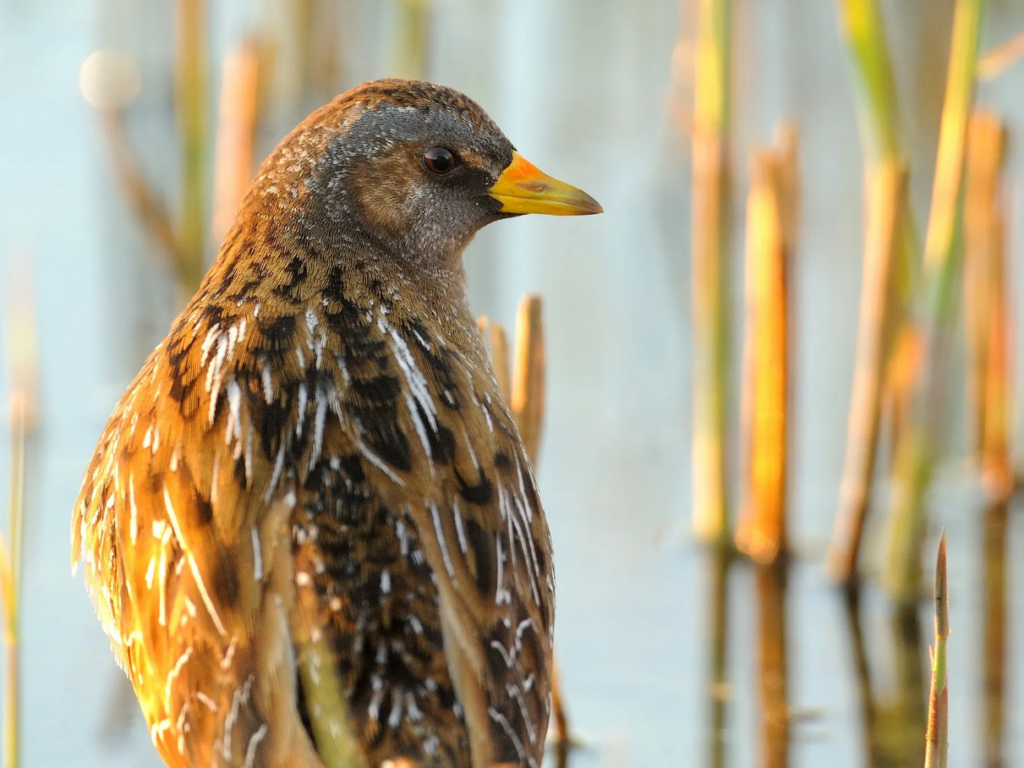
Spotted crake © https://birdfact.com
Pollution from Eutrophication
Lake Dümmer is a shallow lake. Due to its low average depth of just over one metre, the lake is sensitive to nutrient inputs. In 1953, the lake was diked and agricultural use in its catchment area was greatly intensified. This led to a cascade-like decline in water quality. While the lake was once known for its biodiversity of underwater plants, these disappeared with the influx of high nutrient levels. Subsequently, there was a mass development of green algae and, as a result, foul sludge deposits. Oxygen depletion at the bottom of the lake destroyed the benthic fauna. Fish showed stunted growth due to a lack of food availability. The food web in the lake has thus been severely damaged to this day. The diversion of a heavily polluted tributary has improved the situation, especially for the fish fauna, but it is still far from the condition it was in before the embankment was built. Today, blue-green algae blooms re-occur in the water, as there is still too much nutrient input from the catchment area of the main tributary, the Hunte. Since the 1970s, regular desludging work has been carried out on the lake, which however mainly serves tourism and does not change the hypertrophic condition.
EUROLakes’ cooperative approach with local stakeholders
The history of Lake Dümmer shows that cooperation between different institutions can achieve great things, such as the early agreements on Lake Dümmer remediation in the 1980s to improve water quality.
As a wetland of international importance, the lake and its adjacent wet grasslands are of great natural value and offer a wide variety of habitats. Numerous nature conservation measures have been implemented, with the result that bluethroats, black-tailed godwits, ospreys and many other rare bird species have now found a habitat in the area surrounding Lake Dümmer.
However, there have been no positive developments at the lake itself as yet. A committee comprising various lake users, government officials and nature conservationists, named „Dümmer Advisory Board“, is attempting to push ahead with the construction of a 200-hectare reed bed to reduce the trophic status of the Hunte, the lake’s tributary. These efforts are already at a relatively advanced stage. The Dümmer Nature Conservation Ring Ecological Station is involved in the committee and contributes to EUROLakes project‘s cooperative approach with local interest groups. In addition, the Naturschutzring Dümmer communicates the objectives of the measures to be implemented at the lake via EUROLakes, gaining broader visibility and awareness raising.
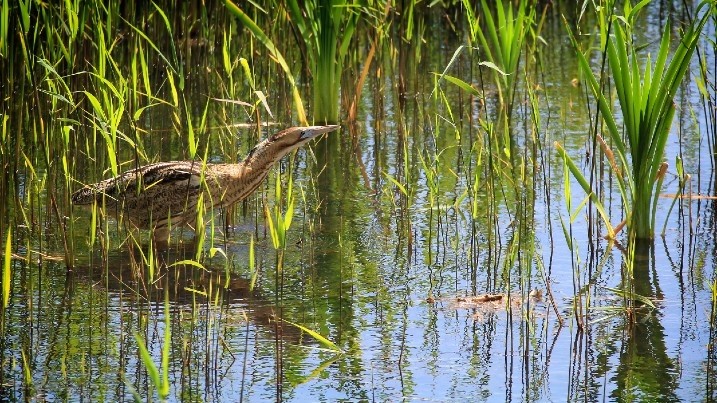
© WWT
The measures are primarily aimed at preserving the reed beds and water lily areas at the lake and developing methods for reinstalling them. Both are not only highly valuable as habitats, but also play an important role in the self-cleaning power and resilience of the water body – on the one hand through sedimentation processes and on the other, through the restoration of food webs. The committee also explains how the lack of low water phases in summer today limits the independent regeneration of the reeds. EUROLakes measures aim to restore shallow water areas that promote the development of water-level reeds. The focus is also on invasive species such as nutria and muskrats, which – aided by climate change – cause lasting damage to reeds and carpets of water lilies and pond lilies.
The coexistence of tourism and nature as a European model
The challeneges at Dümmer also occur in many other bodies of water. Many points of conflict between nature conservation and tourism have already been resolved at the lake. To prevent disturbance to the many thousands of migratory birds during the winter months, sailing and surfing are not permitted from the beginning of November to the end of March. Established nature reserves prevent disturbance to breeding birds by tourism. One remaining relevant but not yet sufficiently recognised point of conflict is water level regulation during the summer months. From March to October, the water level in the lake is kept permanently high by dams for the benefit of sailing. This has serious consequences for underwater and shore vegetation, with reeds retreating from the lake due to erosion and underwater plants having to expend more energy to grow through the higher water column. Therefore, new approaches should be tested. The measures taken by EUROLakes are an attempt to improve the living conditions of reeds and underwater plants within the existing conditions. However, it would make sense to tailor tourist use more to the needs of the Dümmer ecosystem in order to achieve a good coexistence. In this respect, Dümmer lake can serve as an example for other bodies of water where successful restoration measures can be replicated.