




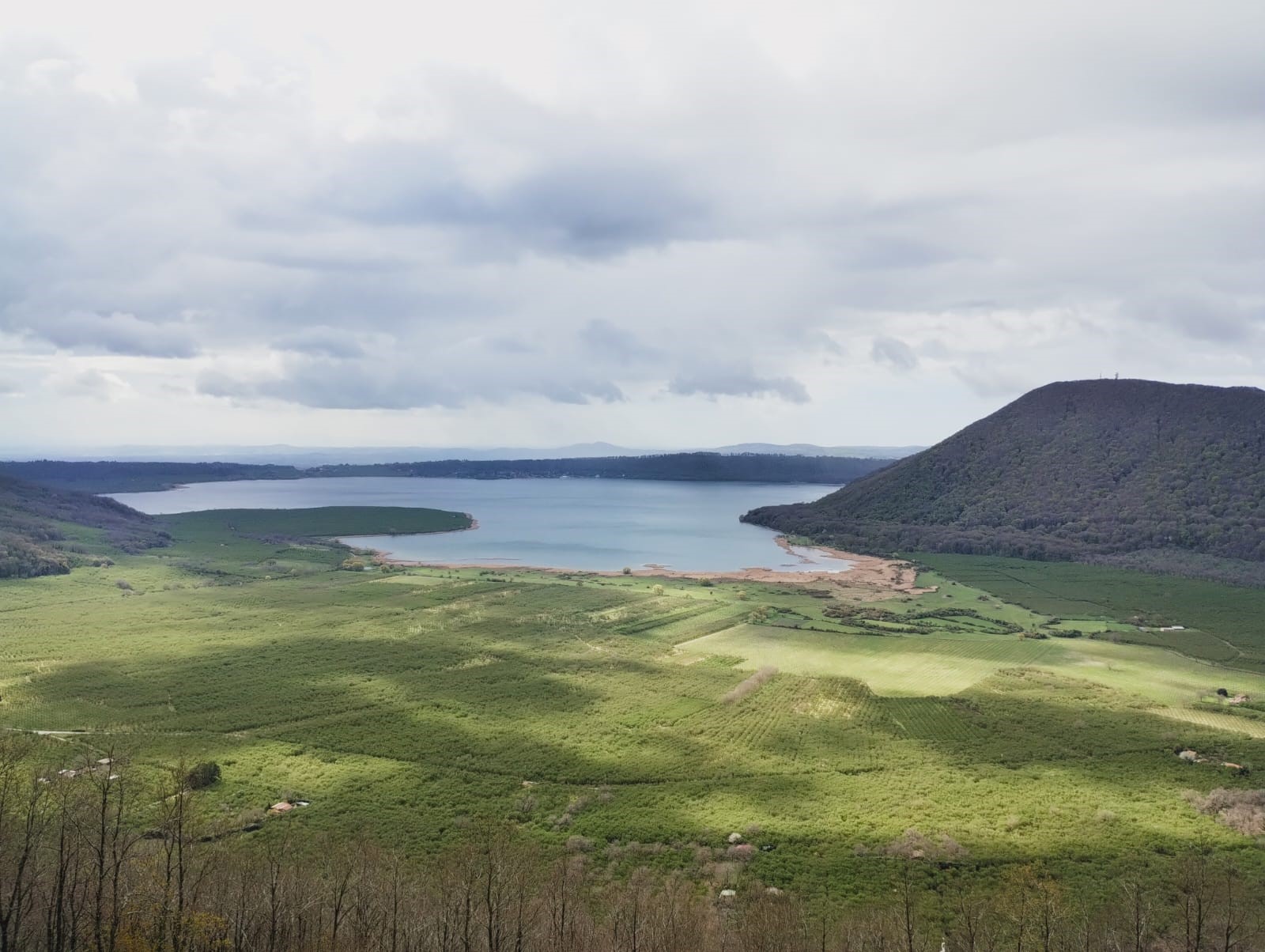
As part of the EUROLakes project, partners from the Landscape Finance Lab carried out field activities at Lake Vico, the project’s demonstration site in Italy. The visit focused on understanding how lake restoration efforts can better align with local economic activities, particularly hazelnut farming, which plays a central role in the region.
Through meetings with farmers, agronomists, researchers and local institutions, the team explored the strong connection between the lake and the hazelnut value chain. The Lazio region is one of Italy’s main hazelnut-producing areas, supporting thousands of livelihoods and forming an important part of the local identity. At the same time, stakeholders highlighted increasing challenges, including climate variability, pest pressures, ageing orchards and growing global competition, all of which raise concerns about the long-term sustainability of the sector.
Lake Vico is also facing environmental issues, particularly related to water quality, influenced by a combination of land use, geology and climate change. A key takeaway from the visit is that these environmental challenges cannot be separated from economic realities. Addressing lake degradation therefore requires solutions that also take into account the needs and constraints of farming communities.
The activities at Lake Vico contribute to EUROLakes’ landscape approach, which considers how agriculture, water systems, biodiversity and local economies interact. The project is now moving into a phase focused on building a shared understanding among stakeholders connected to both the lake and the hazelnut value chain. Insights from the visit will support the co-development of nature-based solutions that improve water quality while strengthening farm resilience.
Discussions with local actors also highlighted the strong base of knowledge and ongoing efforts already present in the region. Farmers, researchers and institutions are already adapting practices, testing solutions and responding to evolving environmental and market conditions. This provides a solid foundation for collaboration and for developing solutions that are both practical and locally accepted.
In a nutshell, the work at Lake Vico reinforces the importance of stakeholder engagement as a starting point for effective lake restoration. By building on local perspectives and experiences, EUROLakes aims to support solutions that balance environmental protection with sustainable livelihoods.