




Ongoing collaboration with farmers, local authorities, researchers, and environmental organisations is helping shape practical solutions to protect Lake Vico and its landscape.
Lake restoration begins well beyond the shores of the water body.
At Lake Vico, one of the three EUROLakes demonstration sites, ongoing stakeholder dialogue and new technical surveys are bringing the project closer to the implementation of nature-based solutions (NBS) designed to address environmental pressures across the lake’s catchment.
Recent activities highlighted the importance of combining scientific knowledge, local experience and coordinated action for the development of restoration measures that respond to both ecological challenges and the needs of the communities who depend on the lake.
Bringing Stakeholders Together for a Shared Restoration Vision
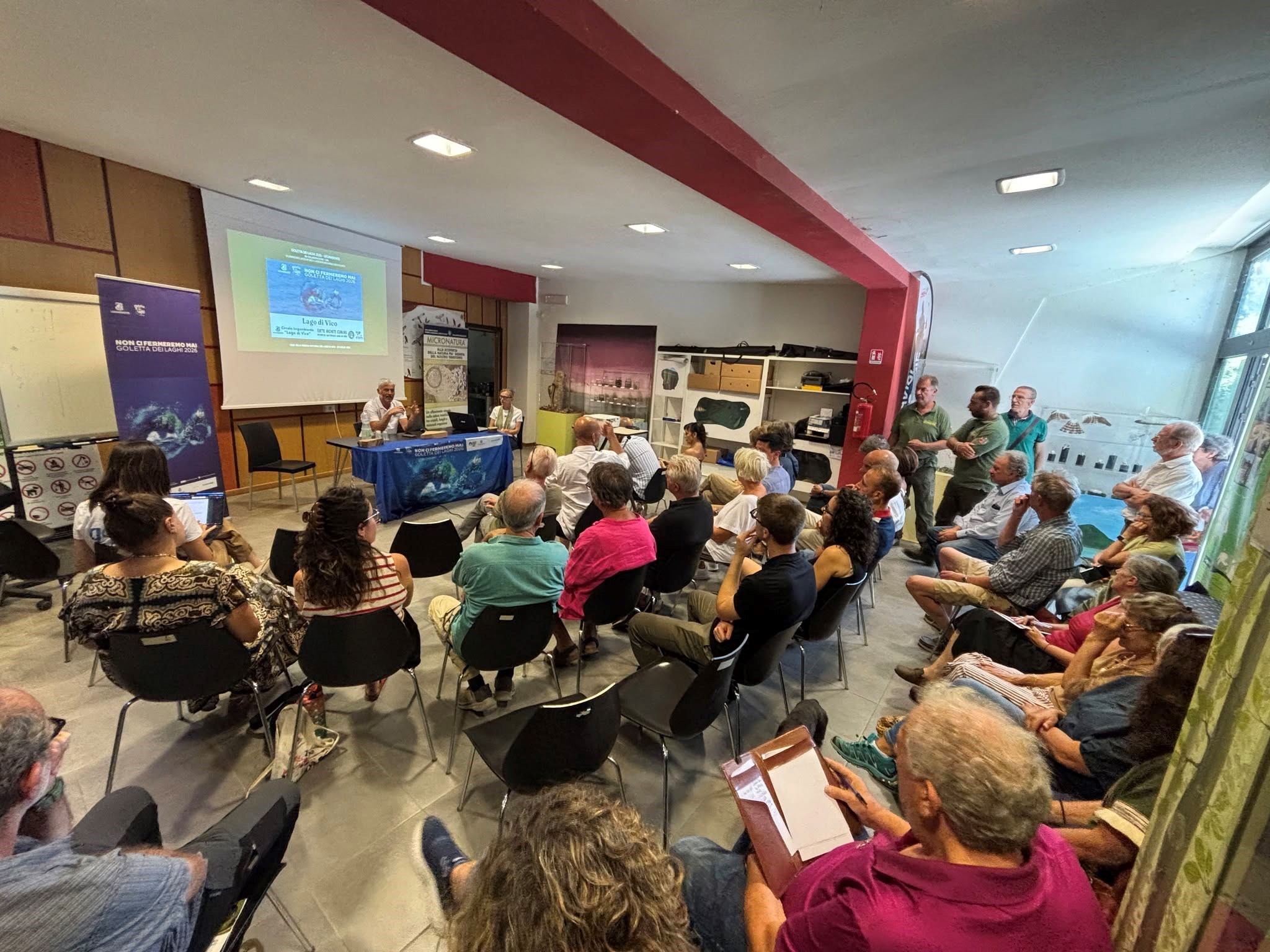
Stakeholder engagement remains at the heart of EUROLakes activities at Lake Vico. The project continues to participate in local dialogue forums and meetings, contributing to discussions on the protection of the lake and the sustainable management of its surrounding landscape.
A significant step took place in October 2026, during a meeting organised and hosted by the Ente Monti Cimini – Riserva Naturale Lago di Vico, bringing together farmers, local administrations and other stakeholders. The discussions focused on identifying measures to reduce soil erosion across the catchment and reviewing the Agricultural Use Plan (Piano di Utilizzazione Agricola (PUA)), which provides guidance on agricultural practices, including fertilisation and plant protection treatments.
The meeting formed part of a broader process promoted by the Nature Reserve following a decision of the Italian Council of State, which called for measures to address the degradation of the lake’s natural habitats.
For EUROLakes, these discussions offer an important opportunity to connect ongoing environmental management efforts with the project’s participatory approach to lake restoration.
The involvement of farmers and land managers is especially important. Agricultural practices influence soil conditions, erosion and the movement of sediments and nutrients from the surrounding landscape into the lake. Understanding local farming conditions and working together to identify feasible improvements is essential to developing effective and lasting solutions.
By involving those who cultivate, manage and depend on the landscape, EUROLakes aims to ensure that restoration measures are not only scientifically sound but also practical, locally relevant and supported by the community.
A Closer Look at the Landscape: Drone Surveys Support NBS Planning
Alongside stakeholder consultations, EUROLakes partners from the University of Tuscia in Viterbo are advancing the technical preparation of their planned nature-based interventions.
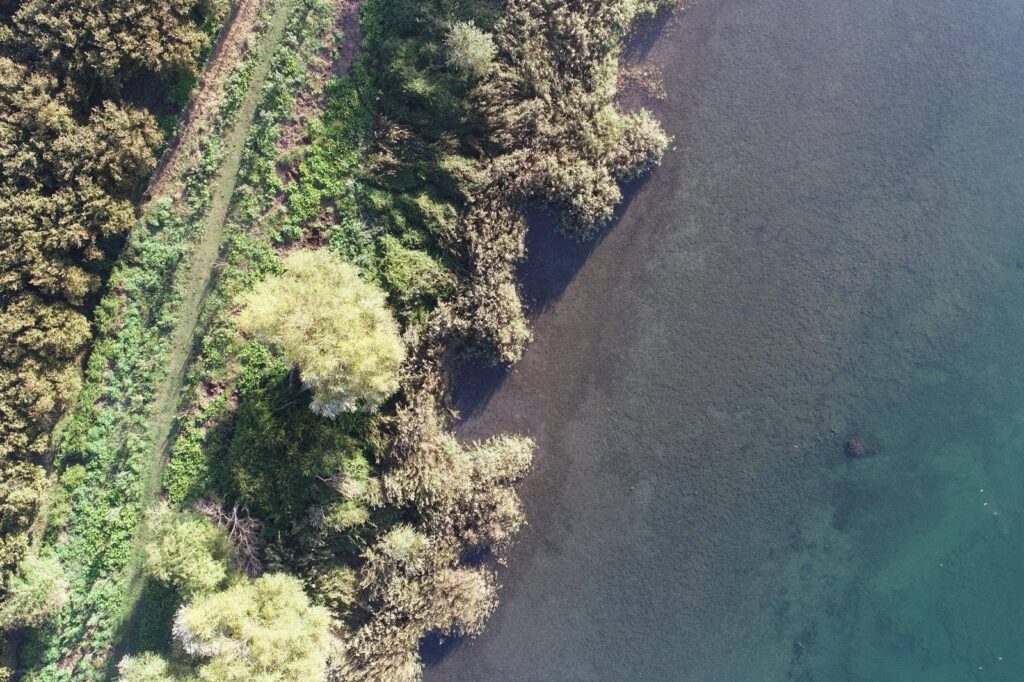
In mid-October, the project shared its first aerial images and drone footage of lake Vico area, captured with the technical support of Sigeo S.r.l.
The aerial survey provides valuable information for characterising areas of interest and identifying suitable locations for nature-based solutions. By offering a broader perspective of the surrounding landscape, drone imagery can help researchers assess terrain characteristics and support decisions about where and how restoration measures should be introduced. This activity is particularly relevant to the project’s efforts to address soil erosion and reduce the transport of sediments and excess nutrients into the lake.
The survey represents another step towards translating environmental assessments and stakeholder input into site-specific restoration planning.
Nature-Based Solutions: Restoring the Landscape to Protect the Lake
Lake Vico faces complex environmental pressures linked to decades of human activity within its catchment, nutrient accumulation and the growing effects of climate change.
These challenges were also highlighted during the concluding Lazio event of Goletta dei Laghi – an annual summer environmental campaign in Italy organized in collaboration with the environmental group Legambiente Lago di Vico and Lake Vico Nature Reserve with the objective to monitor the health and pollution levels of Italian lakes. organised
Environmental monitoring findings presented during the event pointed to severe oxygen depletion in deeper lake waters, with an absence of dissolved oxygen reported at depths between 20 and 50 metres. These conditions emphasize the urgency of addressing the pressures affecting the lake’s ecological health.
Against this background, EUROLakes, working with the University of Tuscia and local stakeholders, is helping identify practical restoration measures through a participatory process.
Among the proposed demonstration actions is the restoration of traditional dry-stone walls, an example of how established land-management techniques can contribute to contemporary nature-based restoration strategies. Dry-stone walls can help stabilize sloping terrain, slow surface runoff and limit soil erosion. Their restoration could effectively contribute to reducing the movement of sediments towards the lake while preserving elements of the area’s traditional agricultural landscape.
Together with improved land-management practices and other measures under consideration, such interventions illustrate the project’s commitment to addressing environmental stress at its source rather than focusing exclusively on the lake itself.
Connecting Scientific Knowledge, Local Experience and Long-Term Action
The recent activities at Lake Vico demonstrate the value of the integrated landscape approach promoted by EUROLakes.
Building on the 4 Returns Framework for Landscape Restoration, the project recognizes that successful lake restoration must consider ecological, social and economic dimensions together.
At Lake Vico, this means creating opportunities for farmers, researchers, environmental organisations, public authorities and local communities to contribute to a shared understanding of the challenges and possible solutions.
The continuing dialogue helps connect EUROLakes activities with existing conservation and management initiatives, strengthening the potential for coordinated action beyond the project’s lifetime.
As technical assessments and stakeholder consultations progress, the next important step will be to translate the identified priorities into concrete restoration interventions and evaluate their effectiveness through appropriate monitoring.
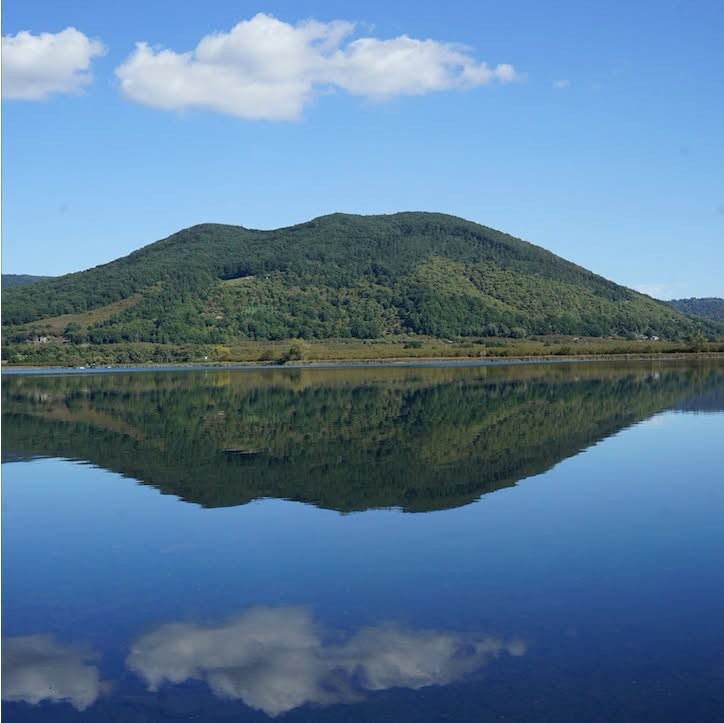
Lake Vico’s experience reinforces a central principle of EUROLakes: restoring natural lakes requires working across the entire landscape — and bringing the people who shape that landscape into the process.
Through collaboration, scientific assessment and the development of locally adapted nature-based solutions, EUROLakes is contributing to a more integrated and sustainable approach to protecting Lake Vico and its ecosystem.