




By Perla Rivadeneyra
The 4th MissionLakes Webinar, titled “Building Consensus for Lake Restoration: Governance, Engagement and Cooperation” held on 29 April 2026, was organized within the MissionLakes Webinar Series and featured contributions from the WaterLANDS, ProCleanLakes and FutureLakes projects, as well as practical insights from the Lake Vesijärvi Foundation in Finland. The webinar led by EUROLakes partner Perla Rivadeneyra from Fondazione Eni Enrico Mattei, brought together researchers and practitioners to discuss one of the central challenges of ecosystem restoration: how to create effective cooperation among institutions, scientists, local communities and decision-makers.
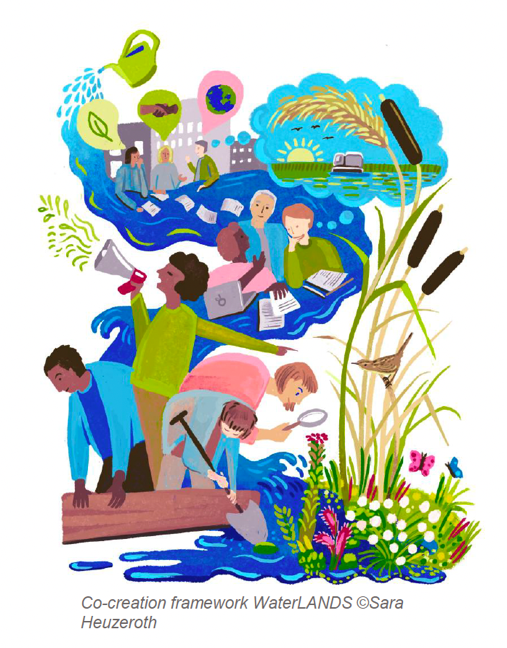
The first presentation, delivered by Sonia Mena from Wetlands International, focused on co-creation in ecosystem restoration and the role of conflicts in participatory processes. The speakers presented the WaterLANDS co-creation framework, developed to support participatory wetland restoration projects across Europe, but which can easily travel to other restoration contexts. Co-creation was described as the process of bringing together different actors and knowledge systems to jointly design and implement restoration actions through early collaboration and empowerment.
Particular attention was given to the distinction between challenges and conflicts in restoration projects. While challenges may simply involve practical obstacles, conflicts emerge when stakeholders hold incompatible values, interests or expectations. Sonia Mena emphasized that conflict should not necessarily be avoided, but rather recognized and managed constructively, as successful conflict management can lead to innovative solutions and deeper collaboration.
The presentation also highlighted several barriers identified through WaterLANDS surveys, including conflicting stakeholder interests, difficulties related to land ownership, lack of coordination between institutions and insufficient funding.
The second presentation, delivered by Xanthi Chantzistrountsiou from the Hellenic Society for the Protection of Nature, introduced the ProCleanLakes project and its approach to translating restoration planning into concrete implementation. The presentation stressed the ecological and social importance of Europe’s lakes, noting that although Europe hosts more than 500,000 lakes, many remain undervalued and increasingly degraded. Only 54% of lakes assessed under the Water Framework Directive currently achieve good ecological status, while only 19% achieve good chemical status.
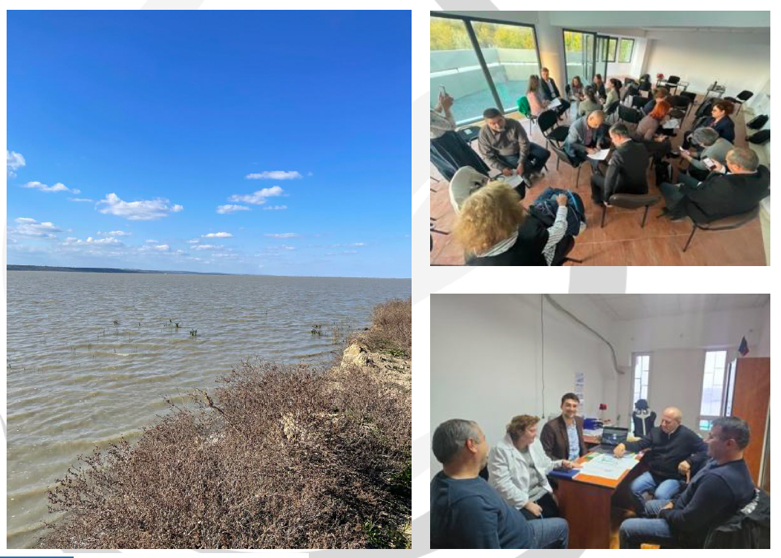
The ProCleanLakes approach combines scientific knowledge, stakeholder engagement, and nature-based solutions tailored to local conditions (the picture above shows a roundtable session in Brates Lake, Romania). The project presented restoration not simply as an environmental issue, but as a coordination challenge requiring alignment between science, policy and society.
An important component of the presentation focused on the project’s governance and replication strategy. ProCleanLakes operates through demonstration lakes, monitoring lakes, and replication regions across Europe, aiming to facilitate the transfer and adaptation of restoration solutions to different contexts. The example of Brates Lake in Romania illustrated how stakeholder roundtables, SWOT analyses, and co-design sessions can support consensus-building and the implementation of nature-based solutions.
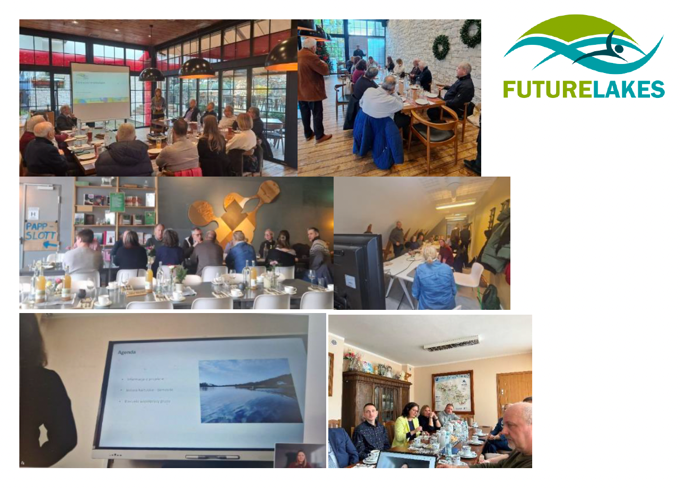
The third presentation, delivered by Julia Szulecka from the Norwegian Institute for Water Research (NIVA), explored governance complexity and stakeholder engagement within the FutureLakes project. The presentation highlighted that nearly half of Europe’s lakes still fail to meet good ecological status under the Water Framework Directive, despite the availability of scientific knowledge and technological restoration tools. According to the FutureLakes perspective, governance and stakeholder engagement are now among the primary barriers to successful lake restoration.
The FutureLakes project presented a comprehensive governance framework structured around several interconnected dimensions, including problem identification, coordination and dialogue, communication, fundraising, implementation, scientific knowledge development and institutional embedding. Stakeholder mapping and power-interest analyses were used to identify relevant actors and understand their influence in restoration processes. The project also examined different governance models across several European lakes, demonstrating that no single governance structure can serve as a universal blueprint for restoration.
A particularly innovative aspect of FutureLakes is the development of “Critical Friends” groups: participatory platforms designed to broaden stakeholder involvement through dialogue, reflection and collaborative problem-solving. Unlike formal committees, these groups aim to create supportive spaces where overlooked issues can be discussed openly and where stakeholders can collectively improve restoration strategies.
The presentation also emphasized the importance of citizen science and public mobilization. FutureLakes has developed several citizen-science initiatives focused on biodiversity monitoring, nutrient tracking and harmful algal bloom reporting through digital applications such as iNaturalist, Aquality and Bloomin’ Algae. These initiatives aim not only to collect environmental data, but also to strengthen public awareness and long-term engagement with lake restoration.
The webinar concluded with a presentation by Heikki Mäkinen from the Lake Vesijärvi Foundation, who provided practical insights from Finland’s long-standing collaborative lake governance experience at Lake Vesijärvi. The presentation offered a stakeholder perspective on how cooperation between local authorities, scientists and communities can support successful and long-term restoration efforts.
The webinar largely highlighted a shared message across all participating projects: successful lake restoration depends not only on scientific expertise or technical interventions, but equally on inclusive governance, trust-building, participatory processes and long-term cooperation among diverse stakeholders. The discussions demonstrated that restoration initiatives increasingly require approaches capable of integrating ecological objectives with social values, local knowledge and collaborative decision-making. Through examples from lakes, wetlands and restoration sites across Europe, the event provided grounds for sharing practical experiences and methodological reflections that can support future restoration initiatives under the broader goals of the European Green Deal and EU Mission “Restore our Ocean and Waters.”
Watch the webinar recording: