




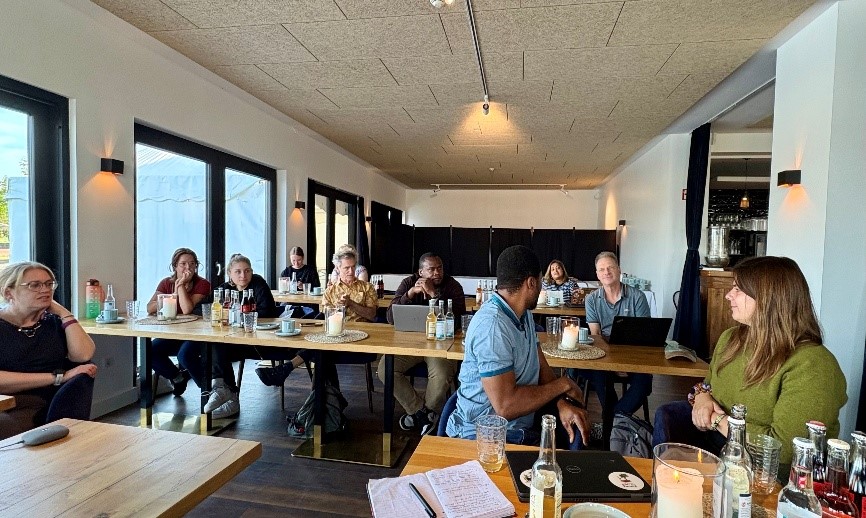
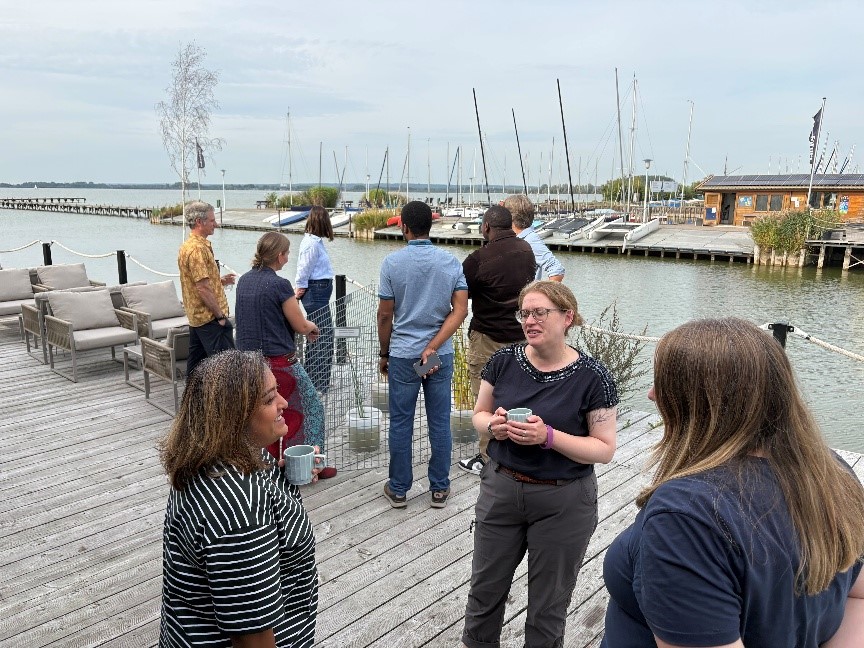
The last days of September gathered the EUROLakes consortium at Lake Dümmer in Germany for its fourth consortium meeting, hosted by Ökologische Station Naturschutzring Dümmer. Combining project discussions with field experience, collaborative learning and the first formal participation of EUROLakes’ three new replication lakes, the two-day meeting reflected the project’s advance towards the 4 Returns Framework implementation, replication and long-term impact.
There are some things about lake restoration that can be discussed around a meeting table and others that make much more sense once you get into a canoe.
The fourth EUROLakes Consortium Meeting offered plenty of both.
Partners went out to Lake Dümmer landscape in northern Germany for two days of presentations, learning and first-hand exploration of one of the project’s three demonstration sites. Lake Dümmer, alongside Lake Vico in Italy and Lake Bistreț in Romania, is where EUROLakes is demonstrating integrated approaches to lake restoration and protection.
This meeting also marked an important evolution in the EUROLakes journey: for the first time, representatives of the project’s three newly selected replication lakes — Lake Shkodra in Albania and Lakes Sapanca and Manyas in Türkiye — joined the consortium meeting.
From three demonstration lakes to a growing restoration community
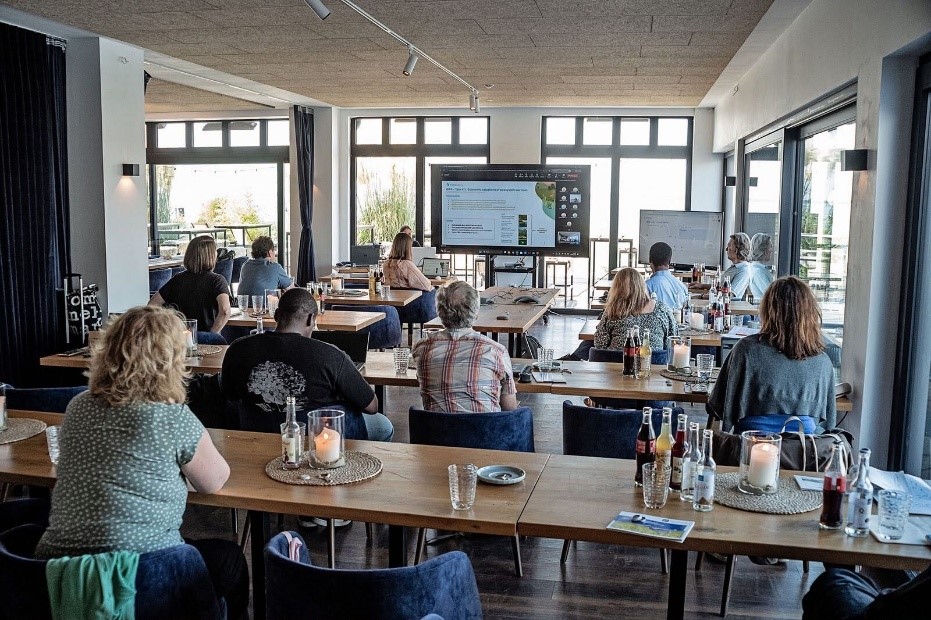
The replication sites opened the first day by presenting their lake landscapes, the environmental and governance challenges they face and their emerging plans for applying and adapting the EUROLakes methodology locally.
At Lake Shkodra, a transboundary lake shared by Albania and Montenegro, the intended approach includes constructed wetlands to intercept sediments before they reach the lake, alongside water-quality monitoring and measures designed to strengthen public engagement with the landscape.
At Lake Manyas, a shallow Ramsar wetland in Türkiye, attention is being directed towards significant pollution pressures, including contamination associated with the lake’s catchment. Proposed interventions include buffer strips and micro-wetlands, combined with monitoring, remote sensing and engagement with local communities and stakeholders.
Meanwhile, Arifiye Municipality at Lake Sapanca presented a basin-oriented approach combining governance, agricultural nutrient reduction and adaptive wetland solutions.
The three cases differ substantially in ecology, pressures, governance and stakeholder environments. Their work over the coming period will help EUROLakes explore how approaches developed within the project can be transferred and adapted to different European lake landscapes rather than simply reproduced. The three sites were selected following an open call that attracted more than 20 applications.
Building the foundations for responsible replication
Replication also brings new responsibilities.
A session dedicated to ethics and data management explored issues that become particularly important as activities expand to new countries and stakeholder groups, ranging from informed consent and personal-data management to environmental health and safety, animal welfare considerations and data transfers involving non-EU countries.
The discussion highlighted an important principle for the next phase of EUROLakes: successful replication must be not only scientifically sound and locally appropriate, but also ethically responsible.
Communication and dissemination activities review demonstrated that the project continues to expand its digital reach and influence along with a growing library of news, policy, educational and knowledge resources, while communication around the replication lakes now becomes an increasingly important part of telling the wider EUROLakes story.
Getting out onto the water
After a morning of presentations, the consortium exchanged slides for paddles.
Guided by the local team, partners took a close look at the Dümmer landscape by canoe to explore the lake and see restoration measures in their real setting.
Lake Dümmer is a shallow lake of around 1,300 hectares surrounded by wet grasslands and internationally important habitats. Its landscape forms part of a Ramsar wetland and the European Natura 2000 network. Among the challenges being addressed is the deterioration of shoreline reed vegetation. At the lake, protective structures are being used to reduce pressure from species such as nutria and muskrat and give vulnerable shoreline vegetation an opportunity to recover. The measures form part of ongoing restoration activities supported through EUROLakes. Seeing these interventions from the water brought in a unique perspective on the realities of implementing nature-based solutions. It also provided a fun team-building event for all participants. With parts of the waterways particularly shallow, there were moments when paddling simply wasn’t doing the job and someone had to climb out of the canoe and push.
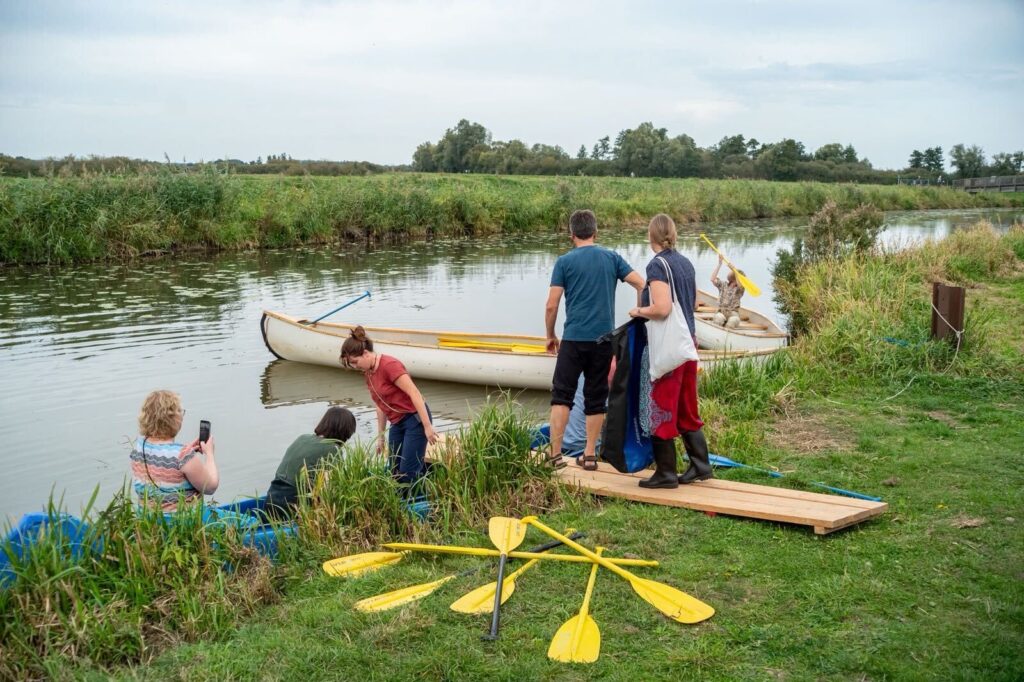
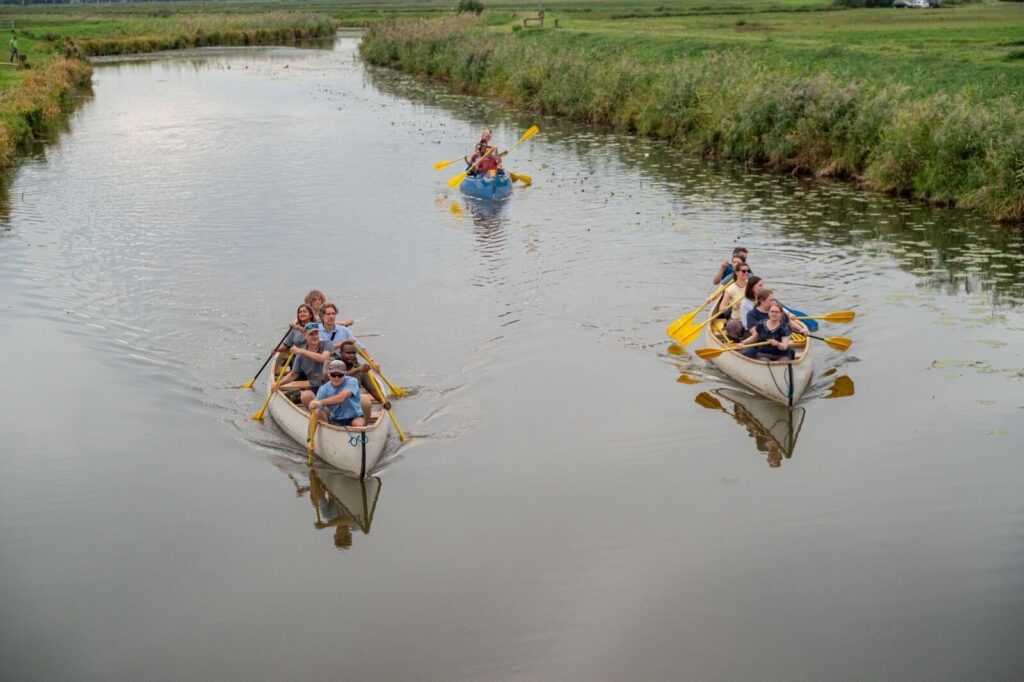
Beyond the laughter — and wet feet — the visit captured something fundamental about EUROLakes. Lake restoration takes place in real landscapes, where ecological processes, water levels, land use, practical constraints and people constantly interact. Experiencing those conditions together helps turn project concepts into a shared understanding of what restoration looks like on the ground.
From implementation to evidence
The second day returned to the project’s broader implementation work.
Partners discussed how educational resources based on EUROLakes data could introduce young people to lake ecology while strengthening skills such as data interpretation, mathematical reasoning and critical thinking. Discussions around implementation planning and monitoring also reflected the project’s transition towards an increasingly action-oriented phase. As restoration measures become more clearly defined at the demonstration sites, monitoring indicators need to be closely connected to the interventions being implemented.
This connection between action, monitoring and evidence will become particularly important as EUROLakes seeks to understand not only whether interventions work at an individual demonstration site, but what can be learned from them for other European lakes. Work on lake classification and upscaling is therefore examining how European lakes can be grouped according to characteristics and pressures, helping identify where approaches demonstrated through EUROLakes could potentially be transferable.
Looking beyond the project lifetime
Another important thread running through the meeting was legacy. Restoring a lake rarely fits neatly within the lifetime of a single research and innovation project. Ecological recovery can take years or even generations, which raised a broader question for EUROLakes: what needs to remain after the project ends?
Partners brainstormed how project assets, educational materials, training resources, methodologies and evidence could continue reaching lake managers, practitioners, researchers and other users beyond the formal project period.
The discussion reinforced the importance of treating exploitation and legacy not simply as end-of-project activities, but as part of the way knowledge is created and shared throughout EUROLakes.
And then came the Human Factor
The final afternoon activity brought an entirely different kind of learning. EUROLakes partners took part in the Human Factor role-playing game facilitated by “ACTeon environment” and developed through the BridgingMinds project.
Participants assumed the roles of scientists, policymakers and civil society representatives confronted with biodiversity crises. But each participant also had a hidden agenda – the “human factor” shaping how they interpreted the situation and interacted with others. The exercise is designed to explore how beliefs, perceptions and biases can influence responses to environmental challenges.
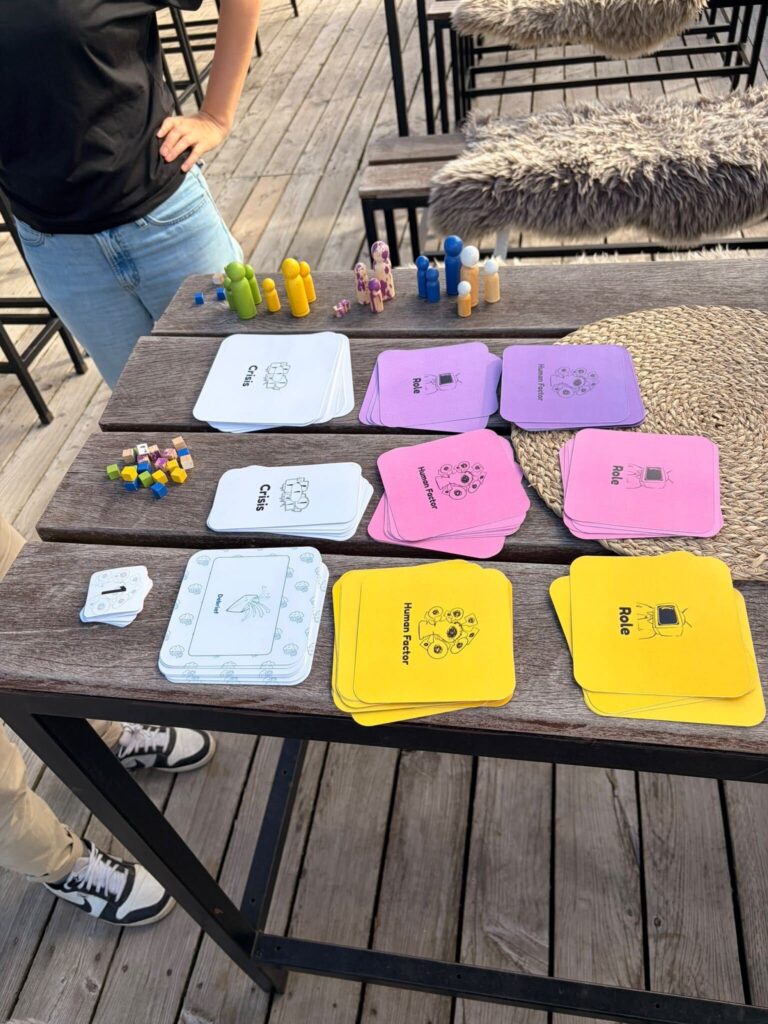
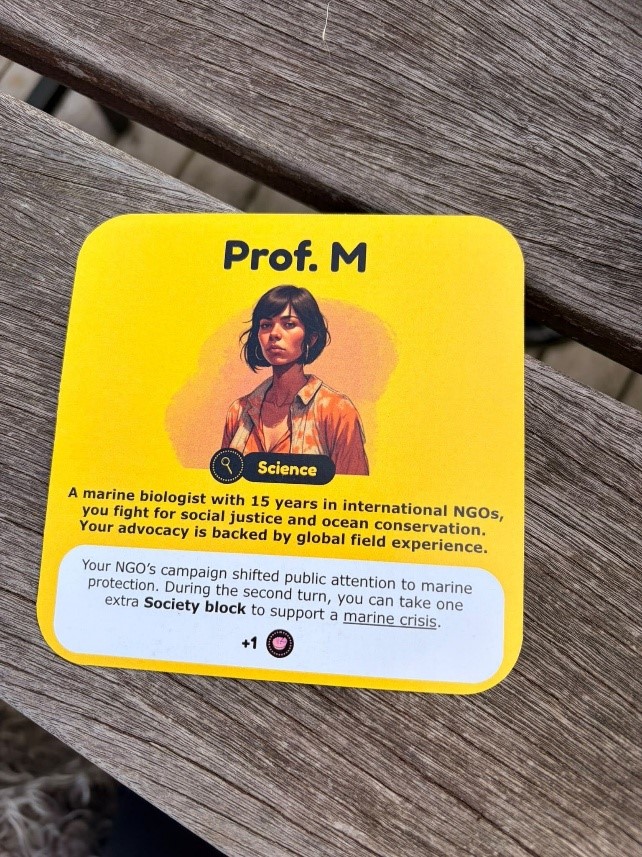
The format was playful, but the underlying question was highly relevant to EUROLakes. Restoration decisions are rarely based on ecological evidence alone. They involve different interests, institutional responsibilities, values, assessments of risk and understandings of what a successful landscape should look like.
The exercise brought the meeting back to one of the ideas at the heart of the project’s landscape approach: restoring ecosystems also means creating the conditions for people to work together.
A bigger EUROLakes community leaves Dümmer
By the end of the two days, the fourth consortium meeting had moved through scales remarkably quickly: from individual monitoring indicators to European lake clusters; from specific restoration structures at Dümmer to long-term project legacy; and from scientific evidence to the human behaviors influencing environmental decisions.
With the three replication lakes participating for the first time, EUROLakes is beginning to move beyond its demonstration landscapes and test what transferring knowledge, approaches and experience to new contexts means.
In the coming months our collaboration will deepen as replication sites refine their action roadmaps, stakeholder engagement and monitoring approaches, while implementation and evaluation continue across the demonstration lakes.